London is full of things to see and do but some of my favourite places to visit in the city are the more unusual ones such as Eel Pie Island.
Not many Londoners, let alone visitors, know about this private island in the middle of the River Thames but it’s undeniably one of the city’s best hidden gems.
Perched on a mudflat between Richmond and Twickenham, this small island is today home to dozens of artists’ studios and is only open to visitors twice a year. Despite its modern day reclusive nature, however, this island has an incredibly colourful history.
Disclosure: This post may contain affiliate links. I have been or could be if you click on a link in this post compensated via a cash payment, gift or something else of value for writing this post. See our full disclosure policy for more details.

Eel Pie Island’s History
Originally called Paryshe Alte, Eel Pie Island has been around for centuries. Some historians believe that it was once the site of a monastery, others argue that it was used by Henry VIII as a courting ground for his many mistresses.
Day trippers began visiting the island in the 17th century, attracted in part by the renowned eel pies that were served by the island’s inn. Today, eel pies are few and far between but they were plentiful in the Victorian era; eels were one of the few fish that could survive in the polluted Thames.
In the early part of the 19th century, the three-storey Eel Pie Island Hotel opened and became a popular spot for day-trippers. Eel Pie Hotel was even mentioned in Charles Dickens’ novel Nicholas Nickleby as a place where people could “dance to the music of a locomotive band”.
In 1880 the Twickenham Rowing Club was established at the island and the club is still going today, making it one of the largest and oldest rowing clubs in London.
From the early 1900s, wooden-framed properties began to appear on the island, used as summer houses by wealthy Edwardian Londoners. Some of the houses remain today as do two of the boatyards that were built to service boats working on the Thames.
In 1957 a pedestrian bridge was built linking the island in the middle of the Thames to the mainland.

Eel Pie Island’s musical history
But what really put Eel Pie Island on the map was music.
During the 1920s, the Eel Pie Island Hotel hosted ballroom dances. These later gave way to jazz sessions, especially when a local trumpeter, Brian Rutland, began hosting regular jazz nights at the hotel.
Arthur Chisnall, a club and concert promoter, later took over and invited blues musicians such as Howlin’ Wolf to play at the island’s jazz club.
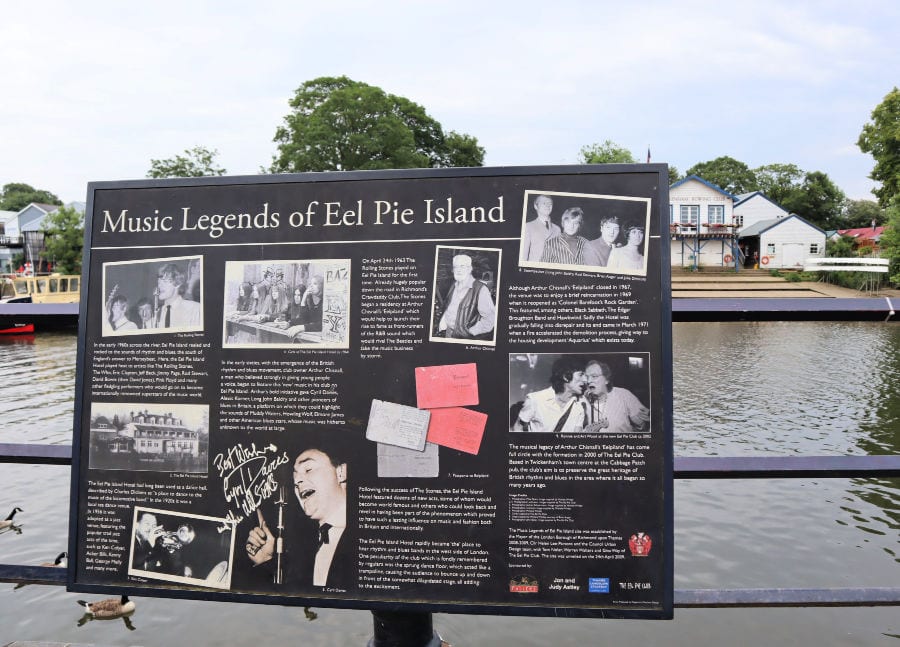
In 1963, Mick Jagger and the Rolling Stones played a weekly gig for a short period of time and the hotel later saw everyone from The Who and Pink Floyd to Genesis, Eric Clapton and Screaming Lord Sutch take to the stage. Rod Stewart was a regular here as was Jeff Beck. Black Sabbath played and even David Bowie performed to a packed dance floor.
Less well known today – but hugely popular back in the 1960s and 70s – was John Mayall’s Bluesbreakers – Eric Clapton was their guitarist for a period.
Sadly, a lack of funds meant that the hotel was forced to close in 1967 at which point it was taken over by waifs and strays. In 1969 the hotel was occupied by a group of anarchists, including Clifford Harper a well-known illustrator for many alternative and mainstream publications.
By 1970 it was the UK’s largest hippie commune and the building was placed under a demolition order until the legendary Eel Pie Island Hotel mysteriously burned down in 1971.
Eel Pie Island today
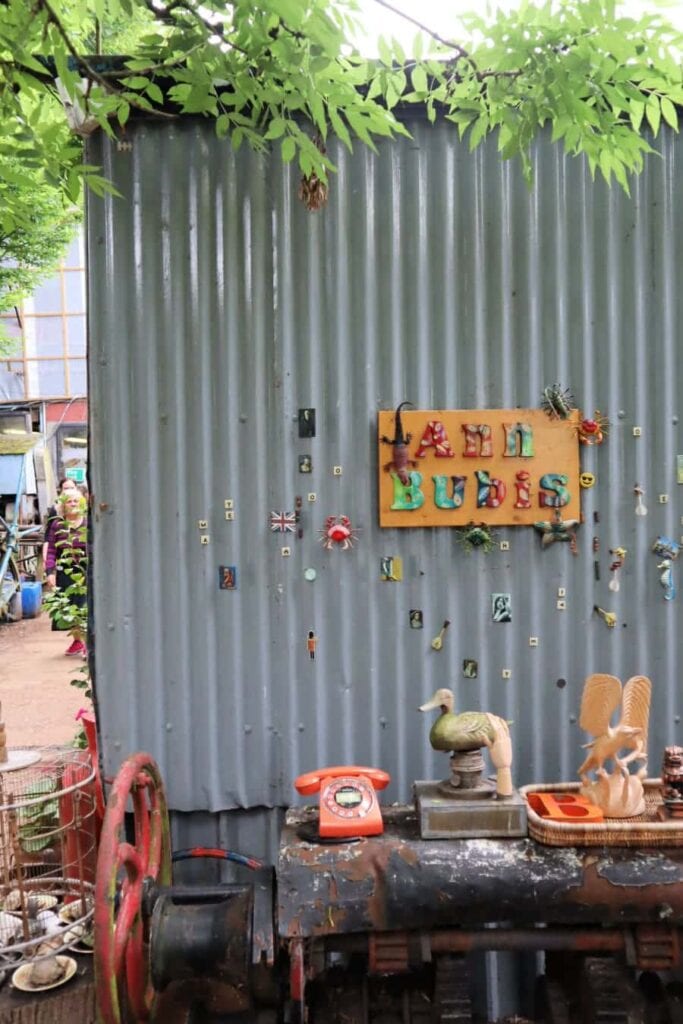
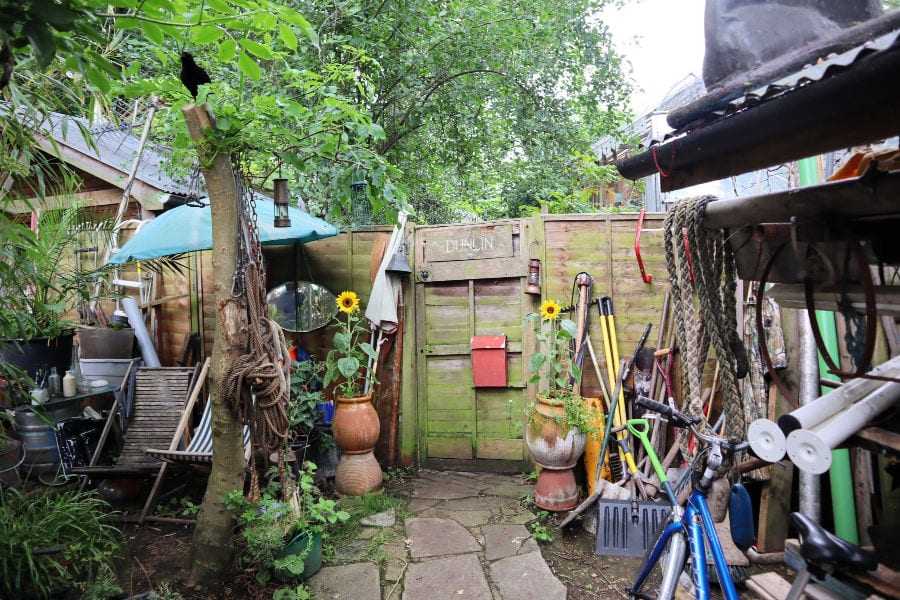
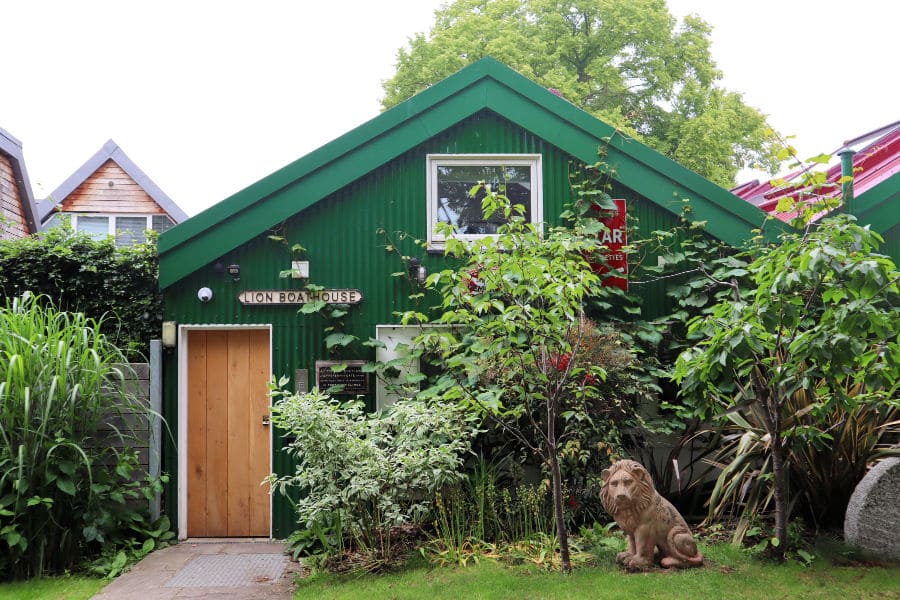
Today this little island in the tidal Thames is a bohemian commune home to the Eel Pie Island artists. Some 30 odd sculptors, inventors, craftsmen, potters and painters have their studios on the island among the old boatyards and winding pathways.
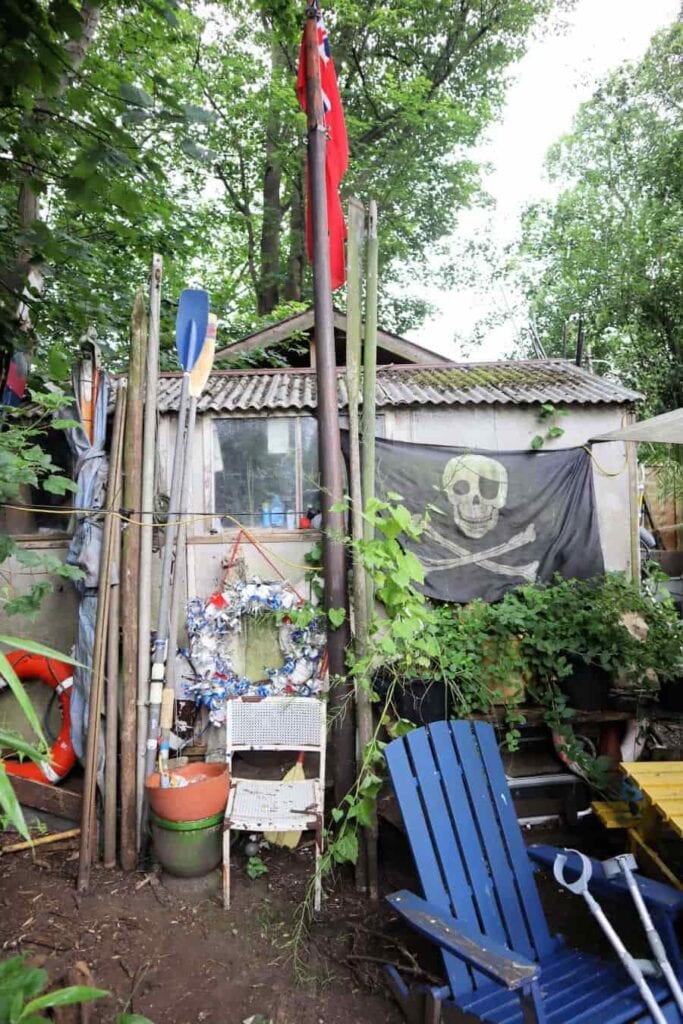
It’s wonderful quirky and whimsical: the public path is overgrown and scattered with old mannequins, headless dolls and abandoned teddy bears. Fairy lights hang along walls, old boat oars stand sentinel against wooden lean-tos and you’ll spot more than one flag bearing skulls and crossbones.
For most of the year the island is closed to visitors, however twice a year it does open to the public. The island community hosts an open house that allows the public to visit the artist studios. During these weekends you can walk across the bridge onto the island and wander from studio to studio, chatting to the local artists.
It’s a fun and unusual day out and one of the best places to get a glimpse into a corner of London usually hidden from public view.
Eel Pie Island Museum
It’s well worth combining your trip to Eel Pie Island with a visit to the Eel Pie Island Museum. Located back on the mainland in Twickenham, the small museum is dedicated to the history of the island with photographs and memorabilia from its heyday as well as information on the history of boatyards on the island.
The museum also runs walking tours of Twickenham, themed around the town’s bohemian and musical past.
The museum is a short walk from the bridge pedestrian bridge over the island.
How to visit Eel Pie Island
Eel Pie Island is located in the middle of the River Thames. Twickenham station in west London is the closest train station (Twickenham is on the district line, check the Citymapper app for travel details). From the station it’s a 12 minute walk to the bridge that leads to the island.
Check the Eel Pie Island website for Open Studio event dates.
The Eel Pie Island Museum is at 1-3 Richmond Road, Twickenham TW1 3AB.