The small city of Amsterdam has long had a reputation for being a big party destination, famous for its Red Light District and its many “coffee shops” where you can legally buy and smoke marijuana. In fact, my only memories from my first visit to Amsterdam as a child is being somewhat shocked when we stumbled into the notorious ‘De Wallen’ neighbourhood!
Today, however, the Dutch city is shrugging off its good time persona and reminding travellers that there is a lot to do here.
We recently spent three days in Amsterdam and quickly fell in love with the city. In addition to its leafy boulevards, crooked canal houses and cycle culture, there are excellent museums, delicious restaurants and some seriously tasty baked goods.
If you are considering visiting Amsterdam then the following is our three-day itinerary, which covers all the main sights including the Anne Frank House Museum and the Rijksmuseum, as well as important things such as the best place to enjoy apple pie.
Disclosure: This post may contain affiliate links. I have been or could be if you click on a link in this post compensated via a cash payment, gift or something else of value for writing this post. See our full disclosure policy for more details.
Three days in Amsterdam itinerary
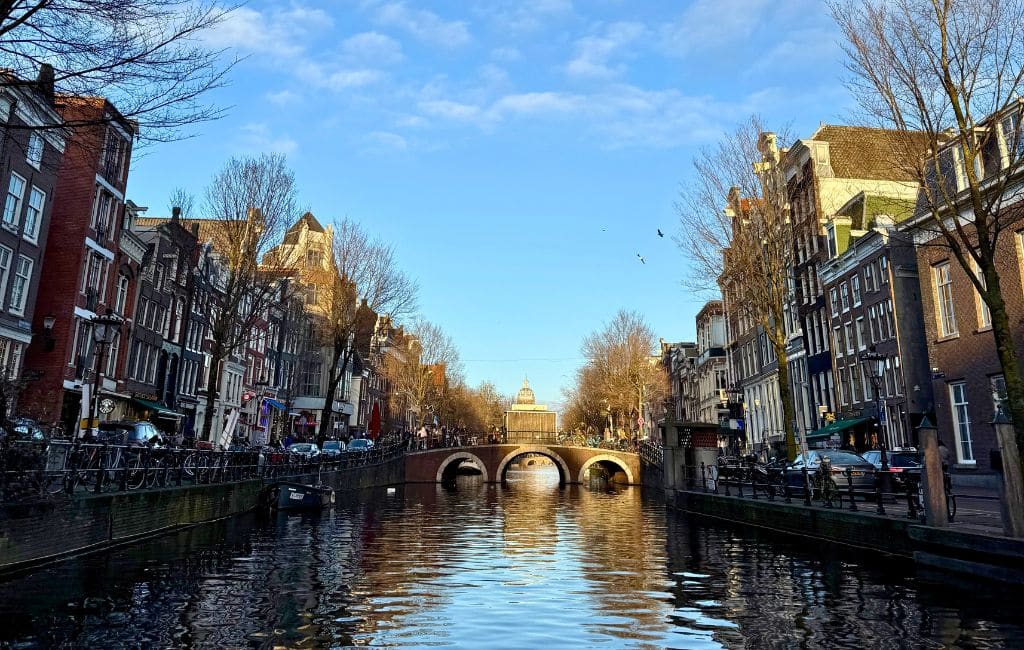
Amsterdam is the perfect size city for a weekend break. Only an eighth of the size of London, its compact nature means that it’s easy to see the main sights – and some lesser known ones too – in a short period of time. We left Amsterdam feeling that we had seen almost everything we wanted to see, which is not something I often say when leaving a destination.
The following three days in Amsterdam itinerary follows our exact trip. Obviously, you can swap activities and sights around depending on time and interest (we didn’t do a canal boat tour until the final day for example) but this will give you an idea on how you can organise your days, particularly if its your first time visiting the city.
Day 1: Morning
We arrived in the evening and checked into our hotel, Hotel Westerpark, part of the Hotel Conscious chain.
Housed in a beautiful old building that was once the office of the Westergasfabriek, a former gasworks, the eco-hotel is home to 89 rooms. The location is excellent, in the Westergas cultural area on the edge of Westerpark and a short walk into the heart of the city. I’ve written more about the hotel below.
We hadn’t booked breakfast at our hotel and, at just under €20 per person we decided to look elsewhere (as a family of five, that would have been quite a punchy breakfast bill!).
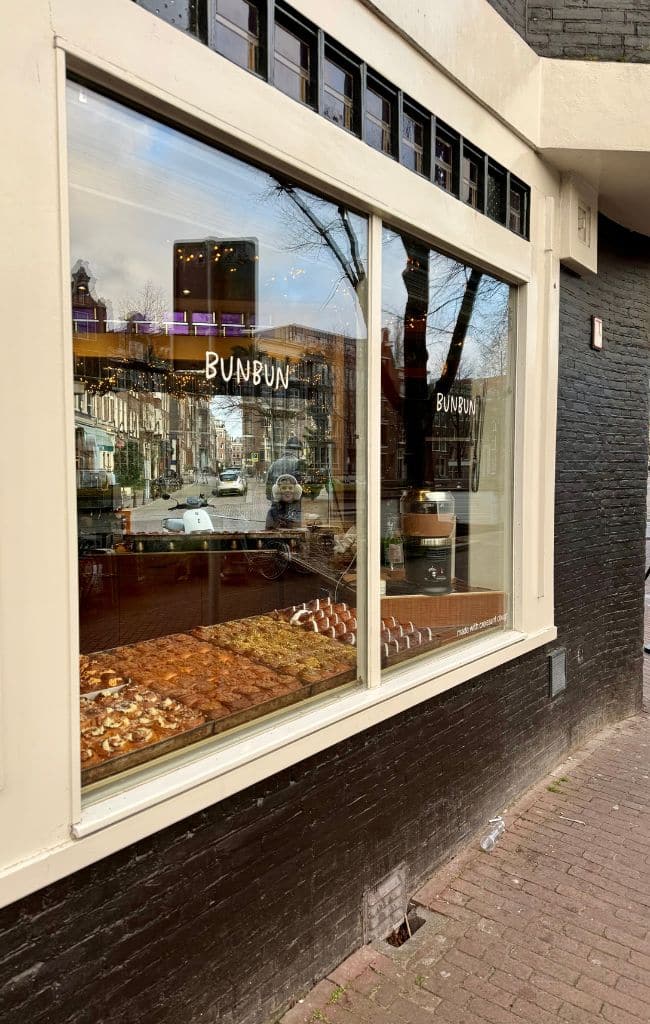
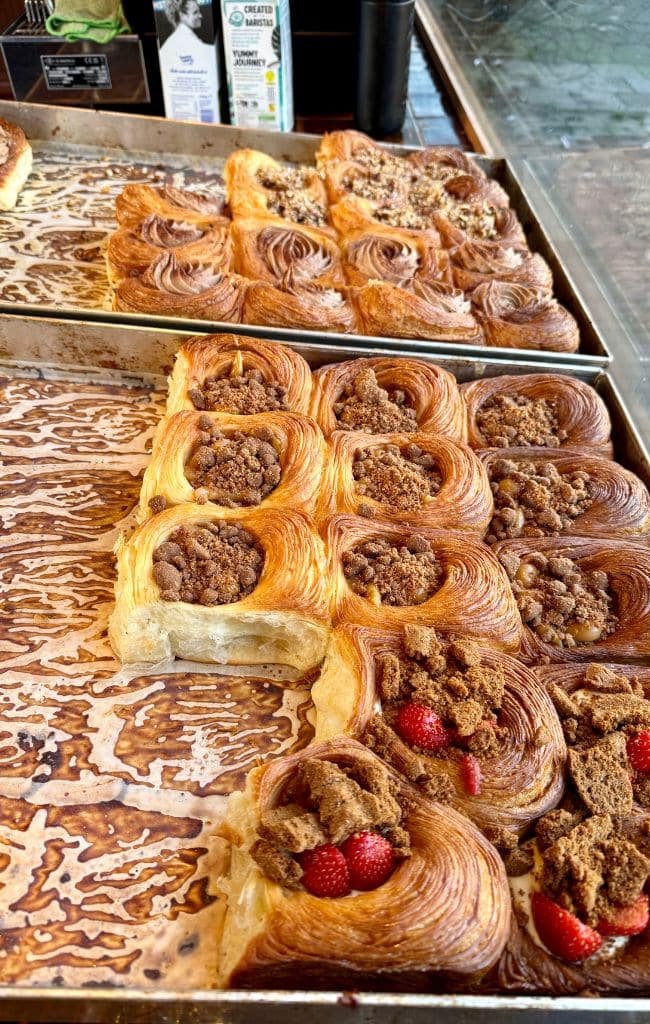
And I’m so glad we did, because this is how we first discovered BunBun Amsterdam. This tiny bakery is located at Prinsengracht 16 and specialises in freshly crafted buns make with croissant dough.
I admit, we stopped there a couple of times during our three days in Amsterdam, trying a variety of their homemade buns including the apple crumble, pistachio and bacon and cheese versions. Personally, the traditional cinnamon bun was my favourite but you can try for yourself and see which one you think is best. If you enjoy good coffee, then Luuk’s Coffee next door is the perfect place.
Anne Frank House
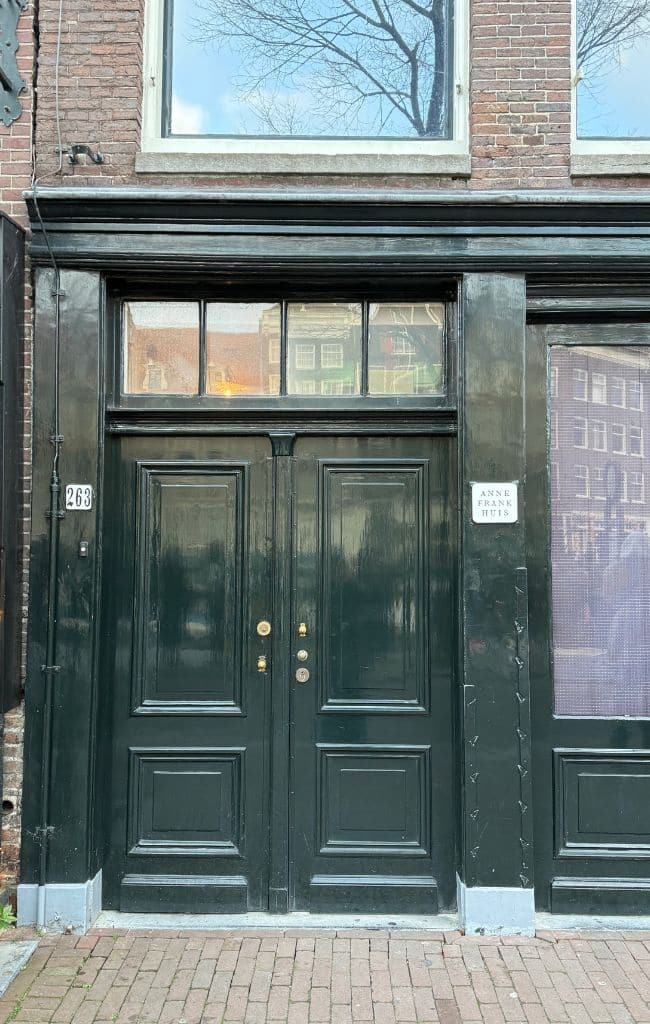
If you only organise one thing before you travel to Amsterdam, make sure to book tickets to Anne Frank House. Whatever you do, don’t turn up on the day and hope to get tickets on the door. Firstly, tickets can only be bought online for a specific time slot and secondly, they alway sell out. Tickets are available ever Tuesday at 10am CET for visits six weeks later, so set your alarms and remember to book them.
This museum is understandably one of Amsterdam’s main attractions thanks to the eternal appeal of the Diary of a Young Girl, written by the teenage Anne Frank when she was in hiding from the Nazis during the Second World War.
The museum is housed in the building at Prinsengracht 263 where Anne’s father, Otto Frank had his business and where the family spent more than two years hiding in a secret attic.
The museum is very well curated and includes the secret annex and attic rooms where the family hid. The rooms, reached through a door behind a hinged bookcase, have been left bare of furniture at the request of Anne’s father. Once the family’s hiding place had been discovered, the Nazis ransacked the rooms and Otto Frank chose to keep the rooms that way saying in an interview, “They took everything out during the war, and I want to keep it that way”.
Despite, or perhaps because of the lack of furniture, the rooms are incredibly moving, in particular the magazine pictures still visible that Anne pasted on her bedroom wall. The remaining rooms in the building that once belonged to Anne’s father’s company office have been restored in period style.
There’s a very good audio guide to accompany you as you wander through the museum, including one aimed at children which my 10-year-old said was very good.
It’s definitely worth spending time in the final exhibition rooms where you can see Anne’s original diary and other manuscripts, as well as displays showing Otto’s long journey home at the end of the war.
One thing to remember, you are not allowed to take any photos inside the museum.

Lunch
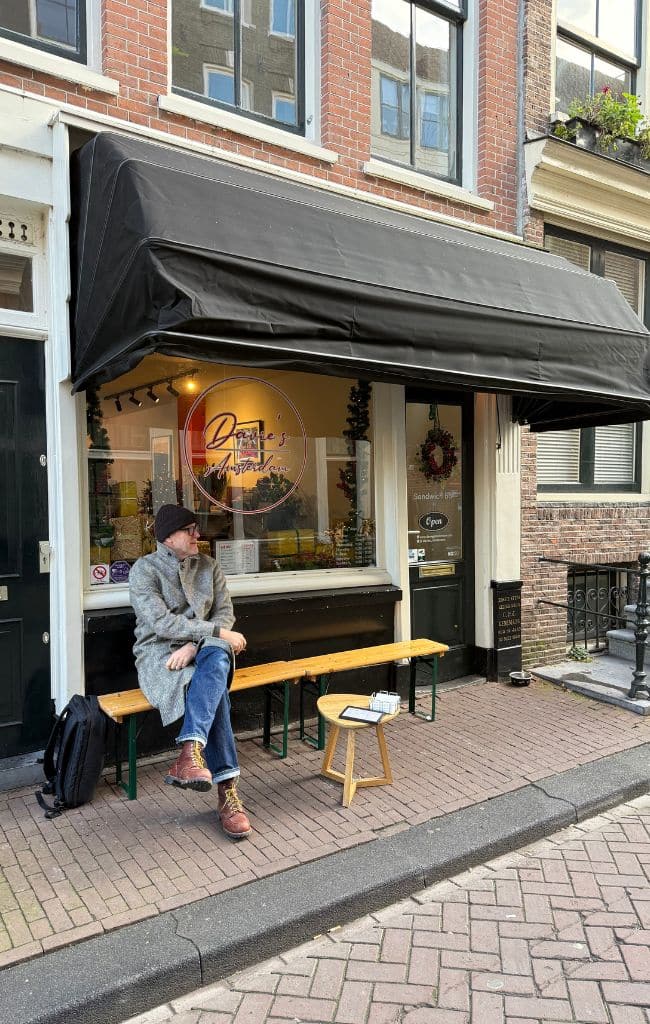
For lunch we stopped at Davie’s Amsterdam, a small sandwich shop that makes some of the best sandwiches in Amsterdam.
This lunch spot receives rave reviews and having been lucky enough to score a table for the five of us I can see why. The concept is simple: tasty sandwiches made with local ingredients, and that includes the bread that is made especially for Davie’s at Kaandorp bakery.
The menu is very simple, just five sandwiches and a regular ‘Special’ slot.
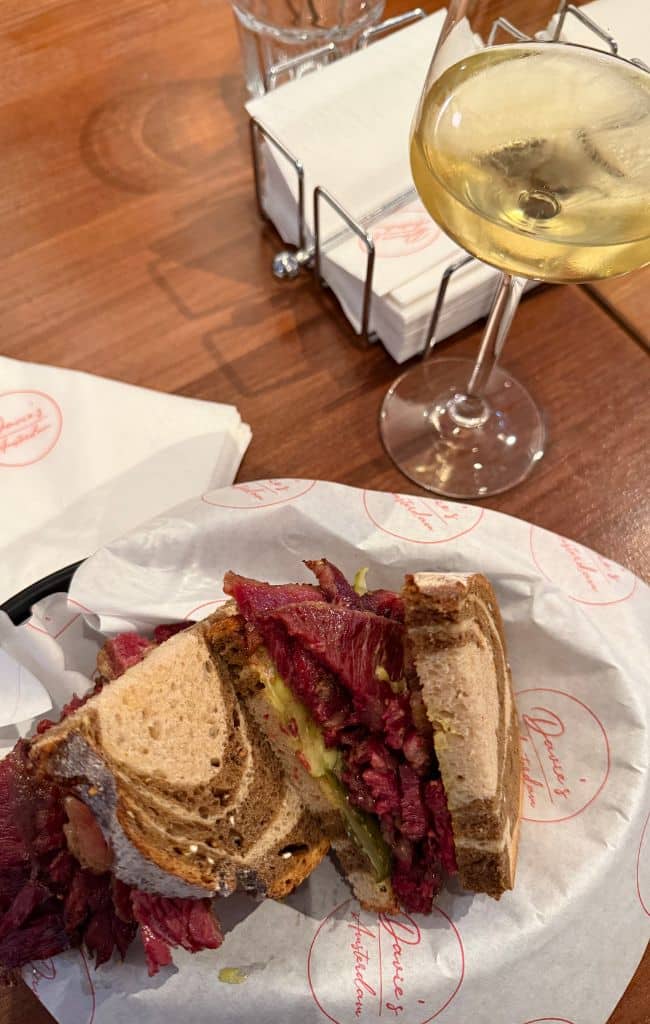
Lelie, the chef’s signature is made with pastrami, mustard and pickle on marbled bread; The Classic involves steak tartare, crispy potato, smoked egg yolk and chives on a baguette;Ba-Da-Bing is made with coppa Iberia, ricotta and tomato on baguette; the Mumbai is curry potato, mint, coriander and cheddar on casino bread; and the Lox is smoked salmon, cream cheese and dill cucumber on focaccia. Between us we tried nearly all five sandwiches and can happily report back that they are all excellent.
Grab a table inside if you can but there is also a bench outside.
Afternoon
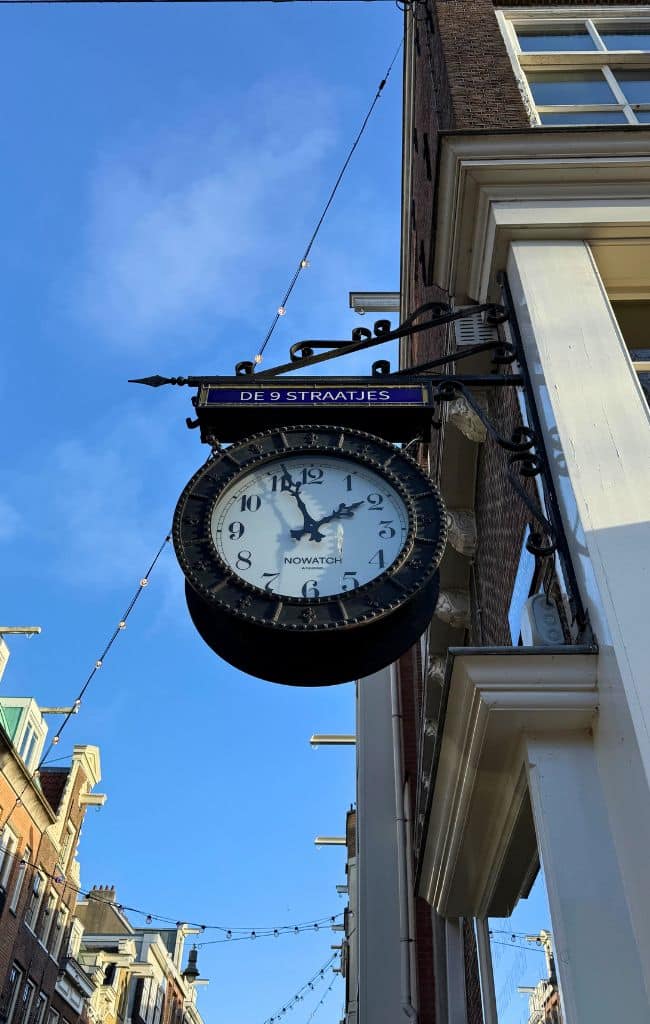
From Davie’s we wandered to De Negen Straatjes (The 9 Streets), a mixture of boutiques, art galleries, gift stores and vintage clothing shops and then on towards the Rijksmuseum, stopping at the dedicated Miffy store along the way. Miffy, for those who don’t know, is Holland’s most beloved bunny (known as little Nijntje locally but Miffy everywhere else!).
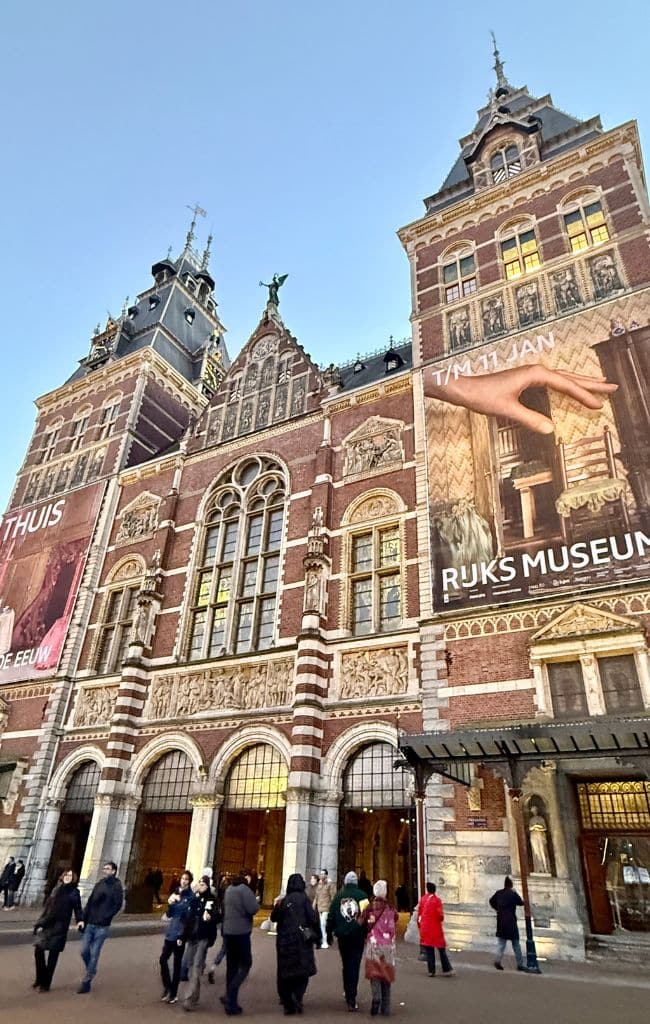
If you are seriously into art and the Dutch Masters then you might want to dedicate more time to the Rijksmuseum but knowing that we would not need a whole day, we opted to visit after lunch. Arguably the most famous museum in Amsterdam, the Rijksmuseum is home to thousands of masterpieces including works by Van Gogh, Vermeer and Rembrandt.
The original museum opened in The Hague in 1798 and later moved to Amsterdam, opening its doors in 1885. In 2003 the museum closed for what was supposed to be a three year renovation project but ended up taking a decade.
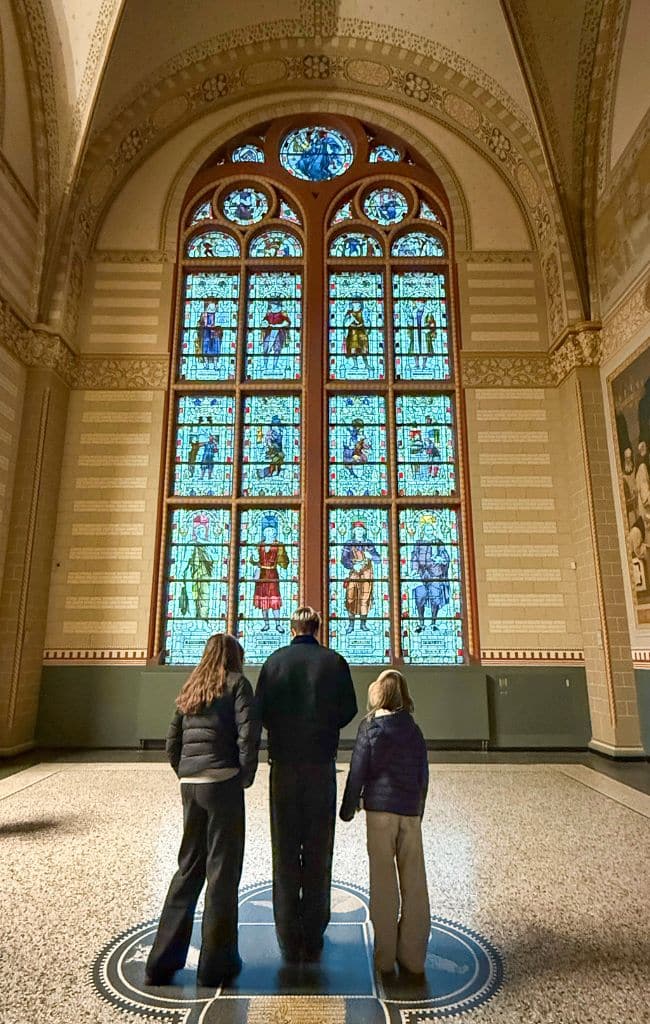
In any case, the “new” museum had long been open by the time we arrived and queued for our tickets outside. If you do plan to visit, then I recommend buying your tickets online in advance. If, however, you are a little bit more flexible with your schedule, you can purchase them on the day at the mobile ticket both outside the main entrance.
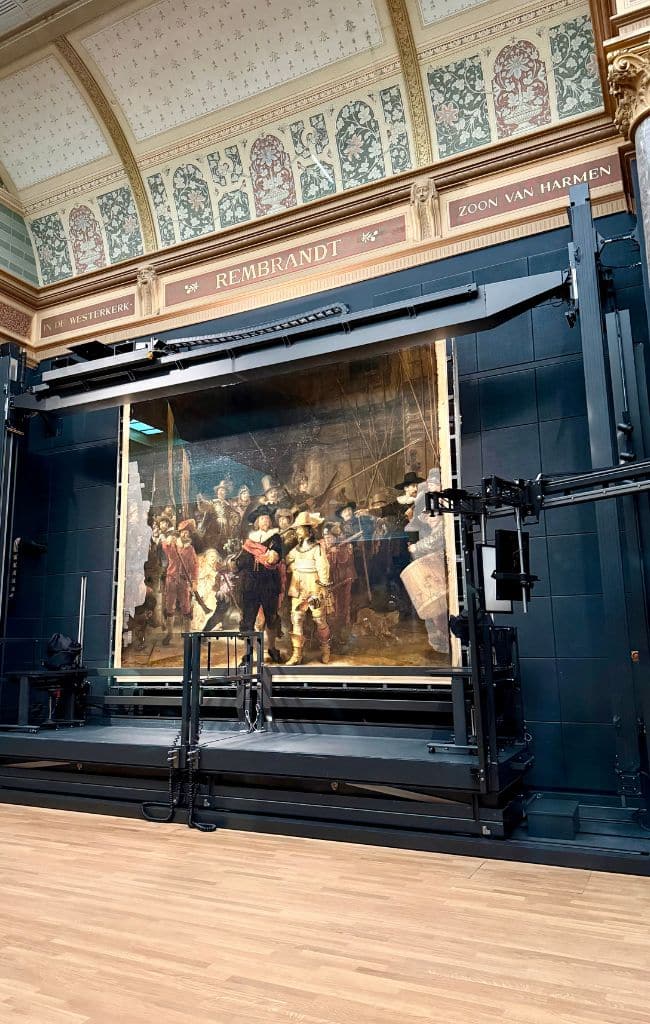
If you don’t have much time – and you have museum-wary kids in tow like I did – then I would recommend heading straight to The Night Watch (1642) by Rembrandt.
This is one of the most famous paintings of the Dutch Golden Age, a great life-sized painting of one of Amsterdam’s civic militia companies. Even if you aren’t in the slightest bit interested in art, this is an extraordinary painting and fantastic to see in real life. They were carrying out restoration work on the painting when we visited which in itself was interesting to see.
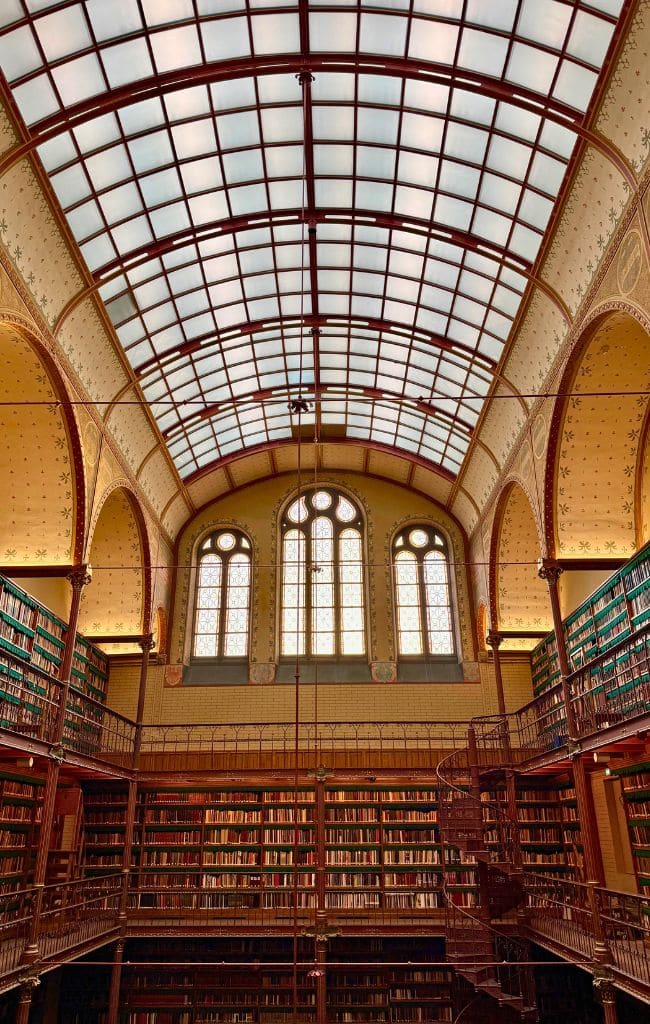
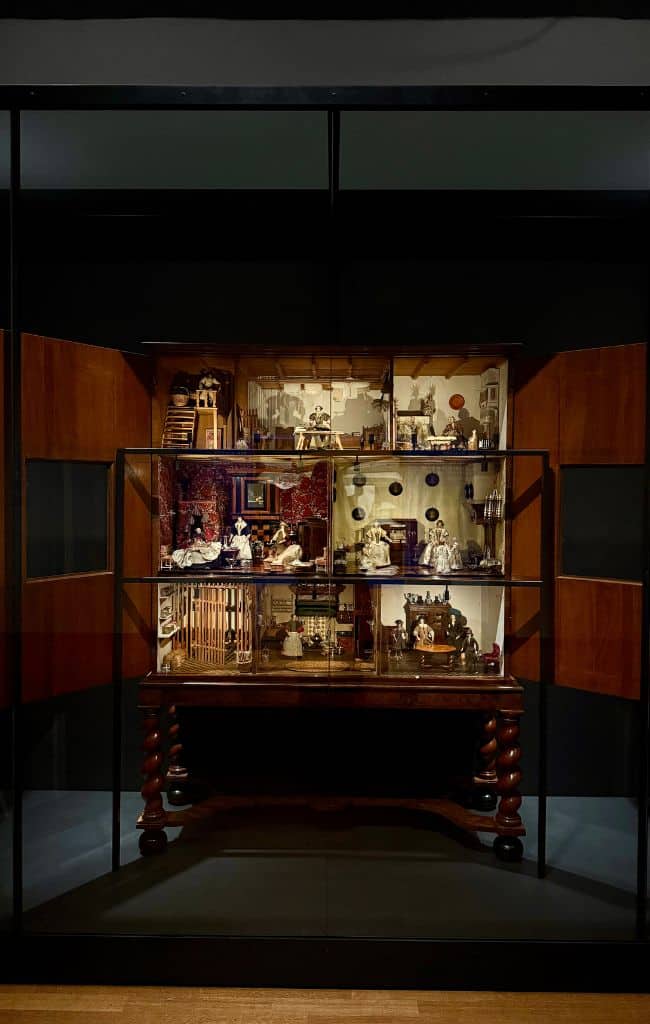
Another highlight is The Cuypers Library, the largest and oldest art history library in the Netherlands. I was also delighted to find Petronella Portman’s dolls house, which was the inspiration for the novel The Miniaturist, by Jessie Burton.

Evening
One of the many things we loved about Amsterdam were the number of independent cinemas scattered around the city. The most well known is the Koninklijk Theater Tuschinski, a wonderful Art Deco cinema that first opened in 1921. It was commissioned by Abraham Icek Tuschinski and the interiors are just as beautiful as the facade outside.
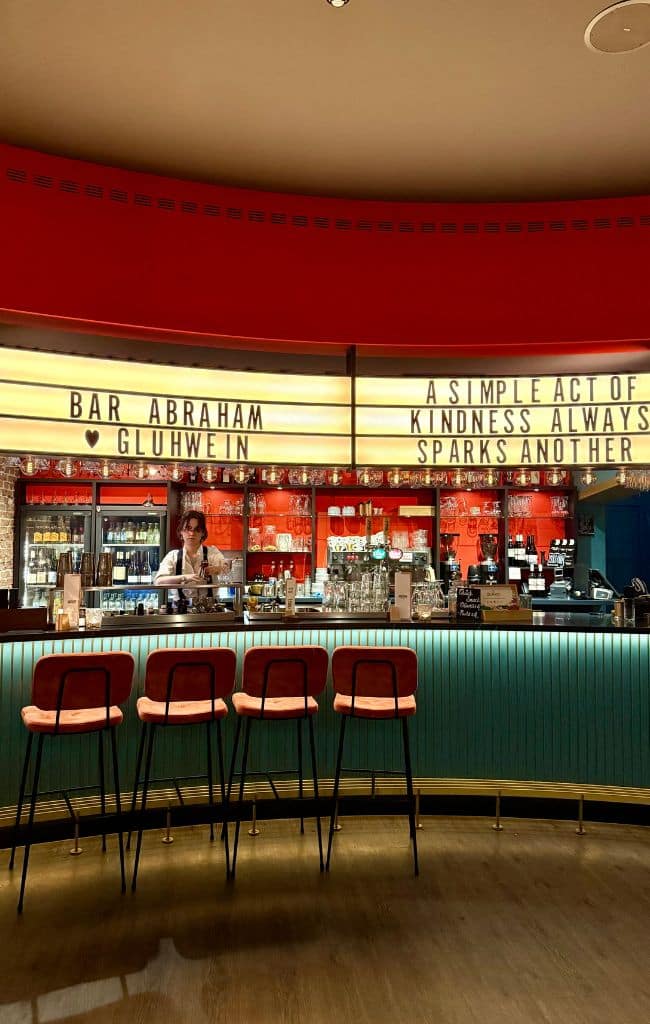
We didn’t get to go into the main screen sadly as a film was underway but there’s a lovely bar, Bar Abraham, that serves film-inspired cocktails and cocktails. They also have a handful of board games and we enjoyed a (relatively!) friendly game of Scrabble before heading to dinner.
Day 2: Morning
For breakfast today we headed to Cafe ‘t Papeneiland in the Jordaan neighbourhood, which quickly became one of my favourite places in the city.
This cosy wood-panelled cafe with chandeliers and Delft plates and tiles on the wall is today the embodiment of gezelligheid, or ‘coziness’ but it was also a safe place for Roman Catholics during the Dutch Protestant Reformation.
During the 16th and 17th centuries, the government outlawed Catholicism and Catholics were forced to worship in private. This led to home owners building hidden churches in their attics. In this neighbourhood, Catholics worshipped in secret via a tunnel that they entered via Cafe Papeneiland and ran beneath the canal. The cafe’s name means “papists’ island”, a reference to the Roman Catholics who were known as papists because of their allegiance to the pope.
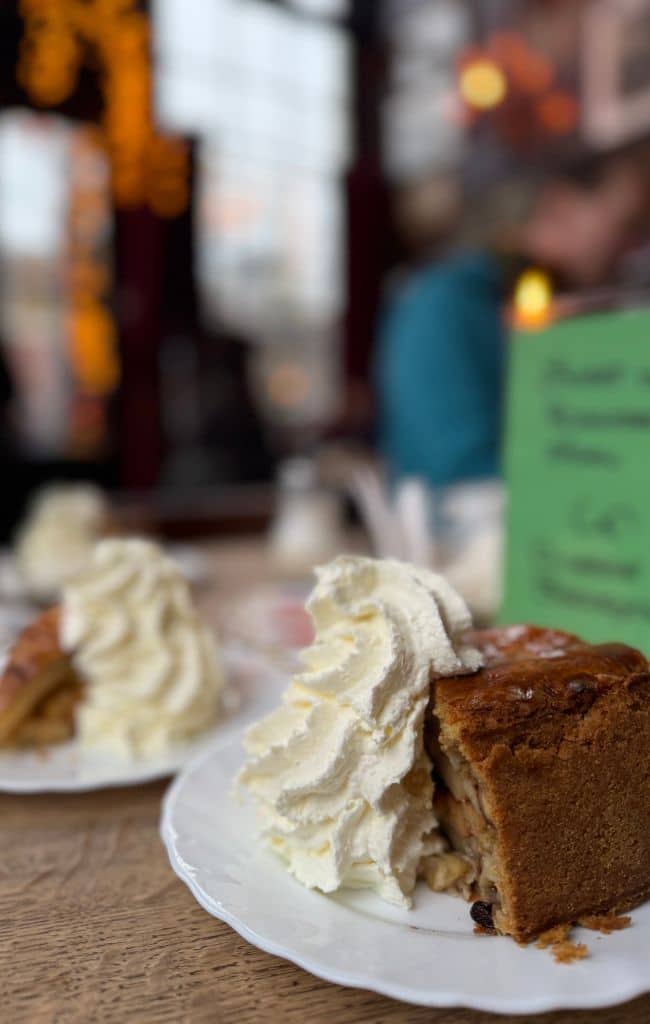
Today, the cafe is most famous for its generous slices of homemade apple pie served with equally enormous servings of whipped cream. The apple pie is sublime, the perfect balance of flaky crust, tart-sweet apples and a dash of cinnamon, and we greedily devoured three between the five of us.
You can’t make a reservation and guests are invited to grab a free seat wherever there is one, often sharing tables with others.
Afterwards we spent the morning wondering around the Jordaan neighborhood, once a residential area for the working class and today a lively corner filled with restaurants, bars, galleries and shops. It’s also where you’ll find the Noordermarkt, a lively market that takes place on Mondays and Saturdays. Fortunately for us, it was on during our visit so we spent an hour or so browsing the antique and vintage clothing stalls.
Lunch
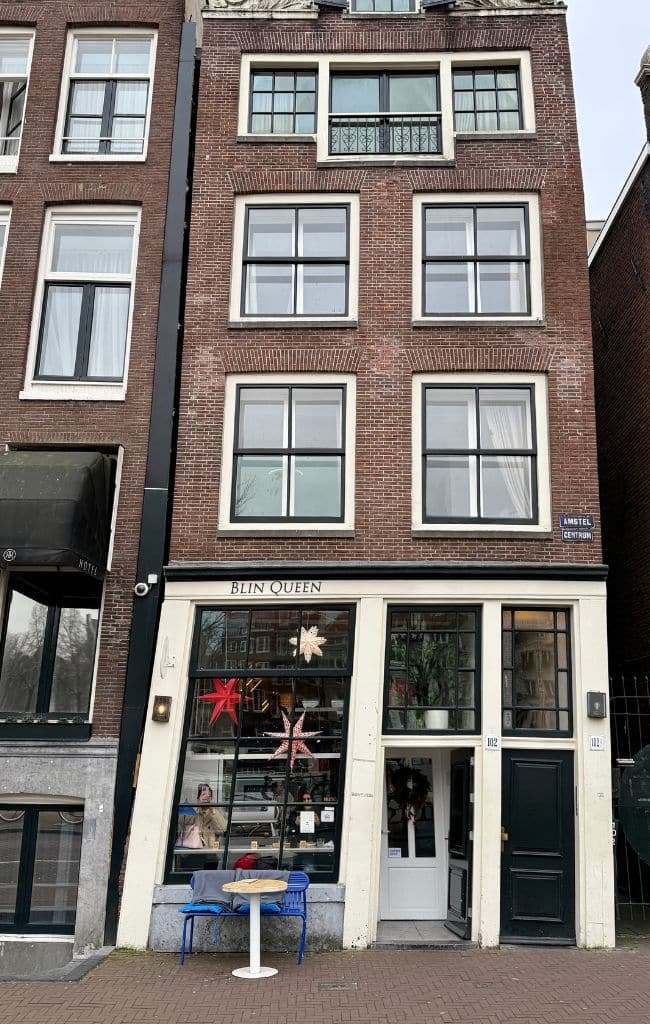
I still can’t remember where I first read about the Blin Queen but I’m so pleased that I found it because this small restaurant is a great spot for lunch.
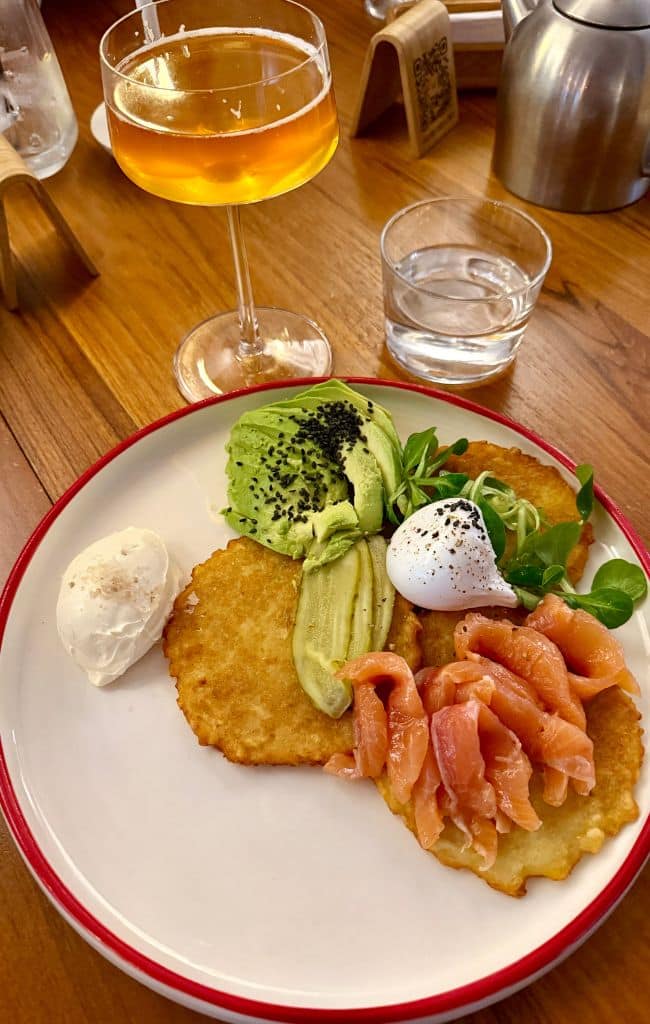
Located on Amstel Canal in Centrum, Blin Queen focuses on making really, really good Dutch pancakes alongside equally tasty artisanal cider. I ordered the potato pancakes aka Draniky, that were served with poached egg, salmon gravlax, pickles, fresh greens and cream fraiche. The rest of the family opted for savoury pancakes with a range of fillings and all of them were delicious.
Afternoon
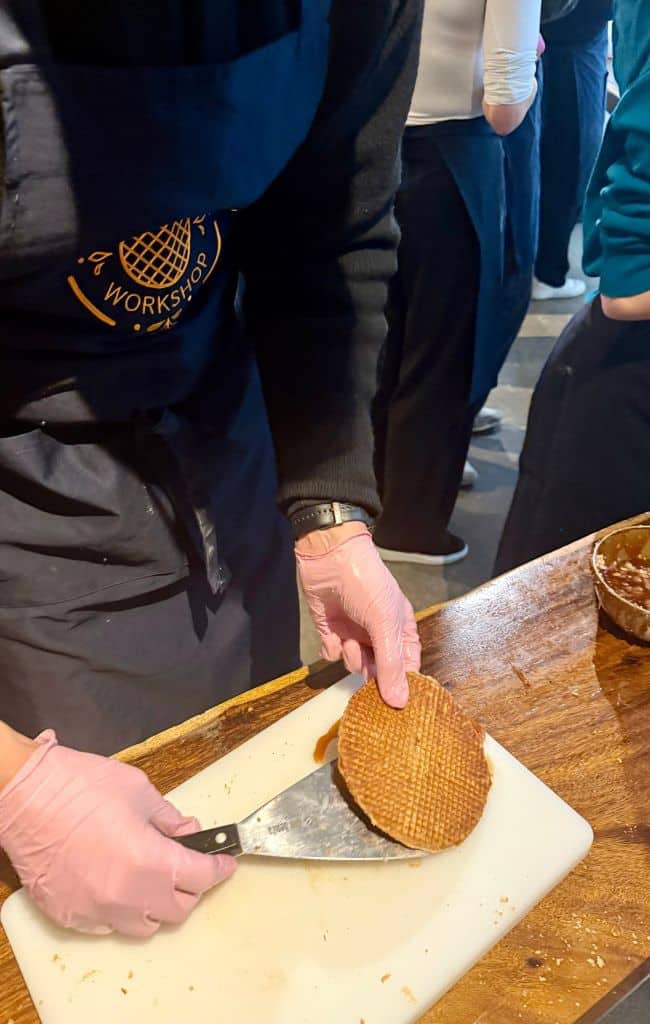
In addition to pancakes, the Dutch love Stroopwafels. Literally translated as “syrup waffle” these thin round biscuits are made from two layers of sweet baked dough glued together with a sweet syrupy caramel filling.
You can find them everywhere in the Dutch capital but, we thought too ourselves, why buy them when we could learn to make them?
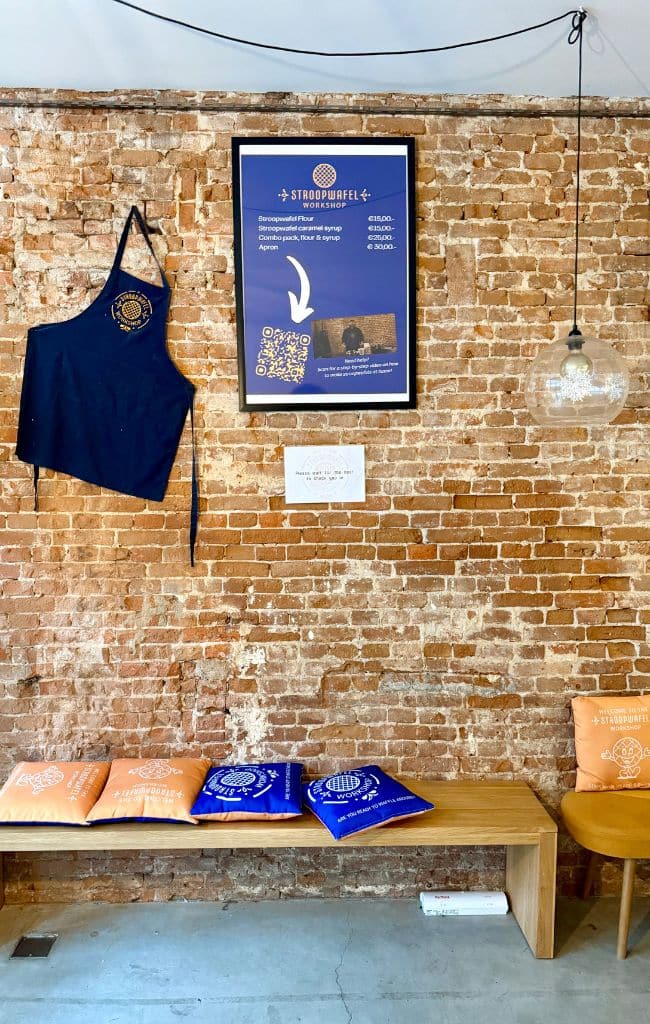
We booked a lesson with The Stroopwafel Workshop, put on our aprons and listened as our entertaining instructor, Dirk, told us all about the art of Stroopwafel-making.
The group lesson is a lot of fun and during the 45-minute class we were able to make two XL stroopwafels, learning how to cook them, separate them, add the caramel filling and decorate them. We had enough time to eat one each, warm from the grill, and packaged up the remaining ones to take home (let’s not mention that I managed to leave the bag of stroopwafels on the plane!).
This is a great way to learn about one of the Netherlands’ favourite treats and is an especially fun thing to do if you are visiting Amsterdam with kids.
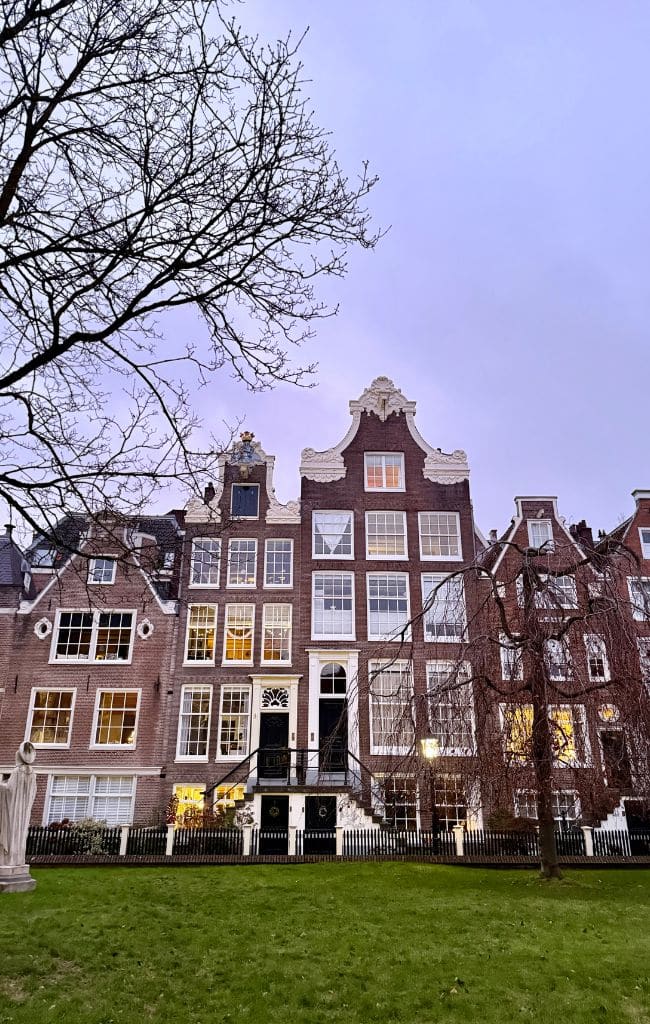
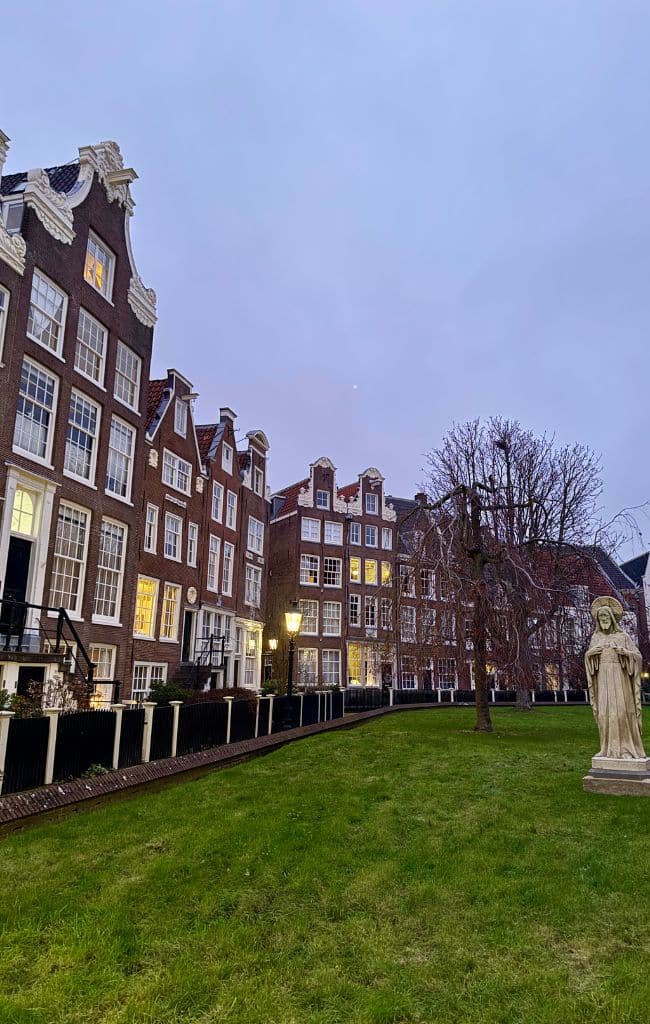
Dirk, our stroopwafel expert, had recommend that we visit the Begijnhof and so, once the lesson finished, we made our way over to this unique corner of Amsterdam.
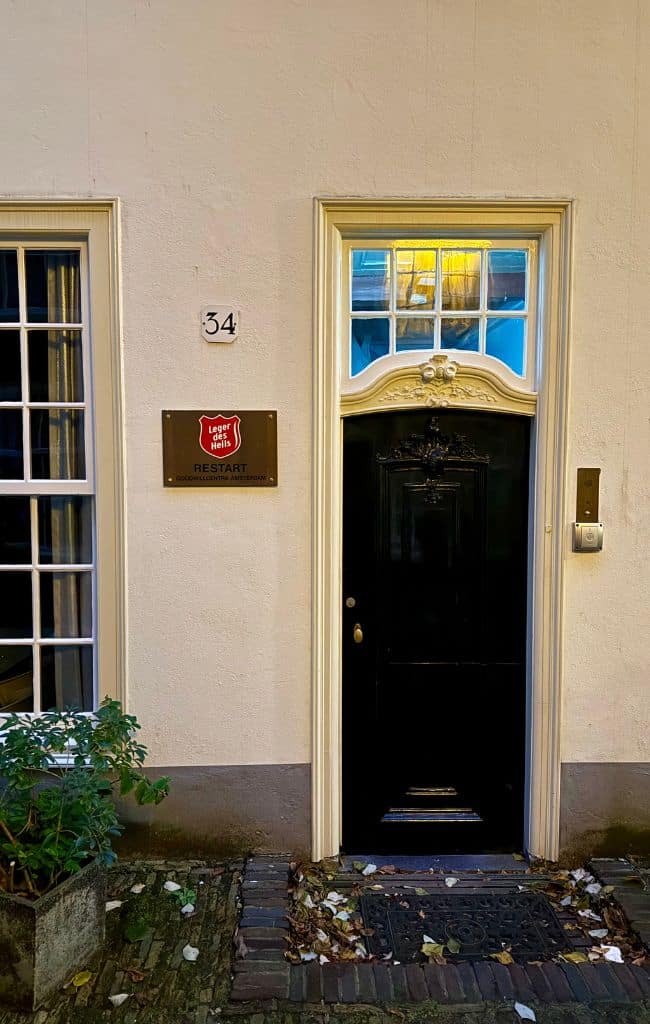
The Begjinhof is one of Amsterdam’s best known hofjes (almshouses), a group of historic buildings with a secluded courtyard and garden in the centre. No. 34 is the oldest building in Amsterdam.
The townhouses were once occupied by Begjinites, a Catholic sisterhood who lived like nuns although they took no vows. When the last Beguine died in 1971, the buildings were taken over by a foundation and today the houses and apartments provide subsidised housing for single women.
Women can apply in writing to the foundation to live here and once you are accepted, you can stay until you die. There are a few conditions, however, you must be aged over 30 and while you are allowed to have a partner, you are not allowed to cohabit.
This really is a lovely corner of the city and well worth a visit.
Dinner
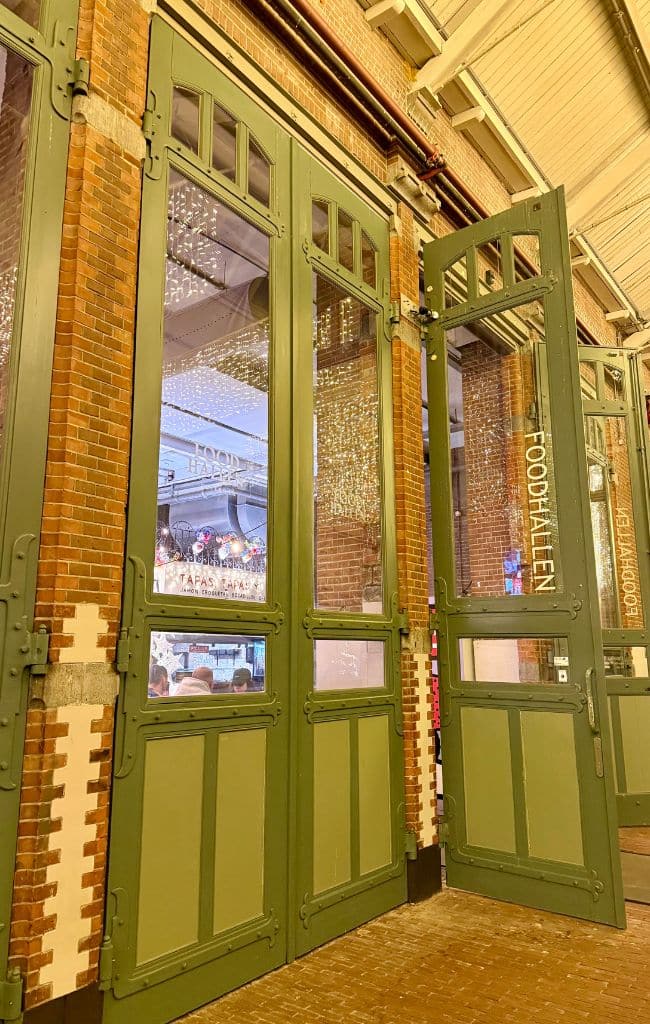
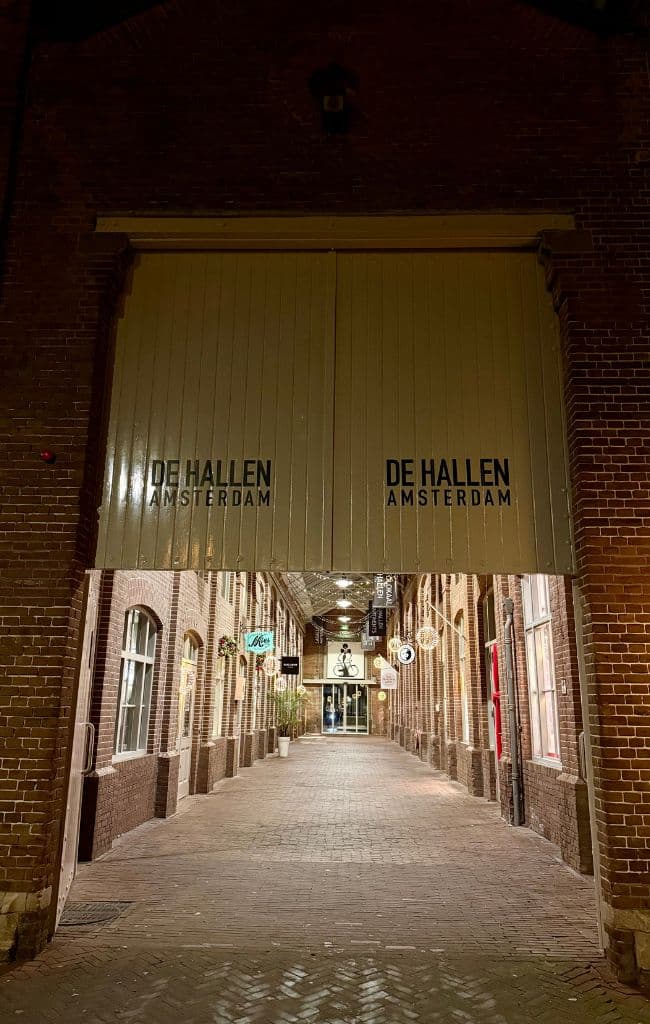
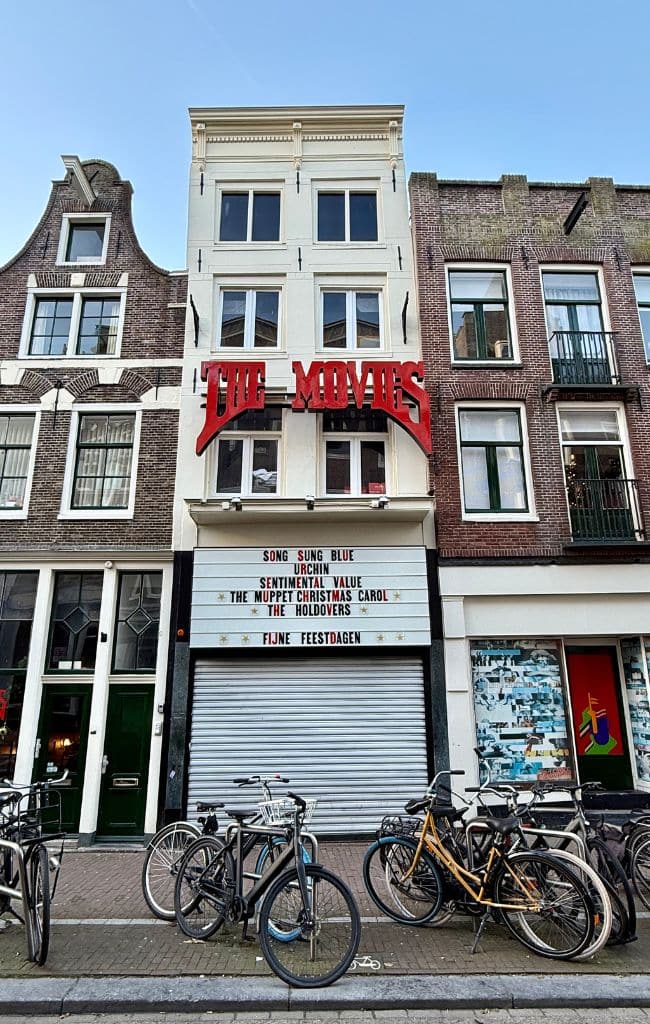
For dinner we headed to the Foodhallen in Amsterdam West. The area is also home to a cinema and shops but our goal was to get something delicious to eat.
The market is home to 21 food stalls selling everything from pizza and sushi to tacos, burgers, Mumbai street food, Asian noodles and more. As with most food halls, the prices are not necessarily much cheaper than if you were to dine in a restaurant, but it’s a fun atmosphere and the food is really good. Between us we ordered pizza, bao buns, dumplings and a juicy hamburger, and everything was delicious.
Day 3: Morning
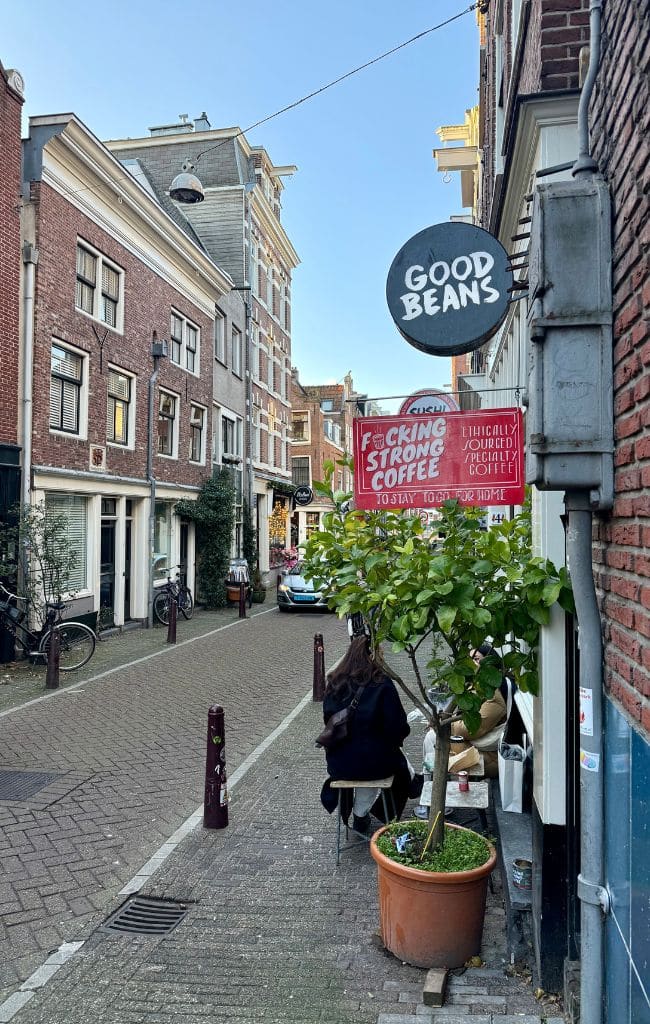
We started our final morning with a stroll along Haarlemmerstraat, a cool street lined with boutique shops, coffee shops and vintage stores, stopping for excellent coffee at Good Beans. The shops were only just opening when we got here so if you decide to visit I would recommend arriving mid-morning.
After another stop at BunBun, we walked to Our Lord in the Attic.
Located along a canal in the oldest part of Amsterdam, on the edge of the famous red light district, this historic 17th century canal house hides a Catholic Church in its attic.
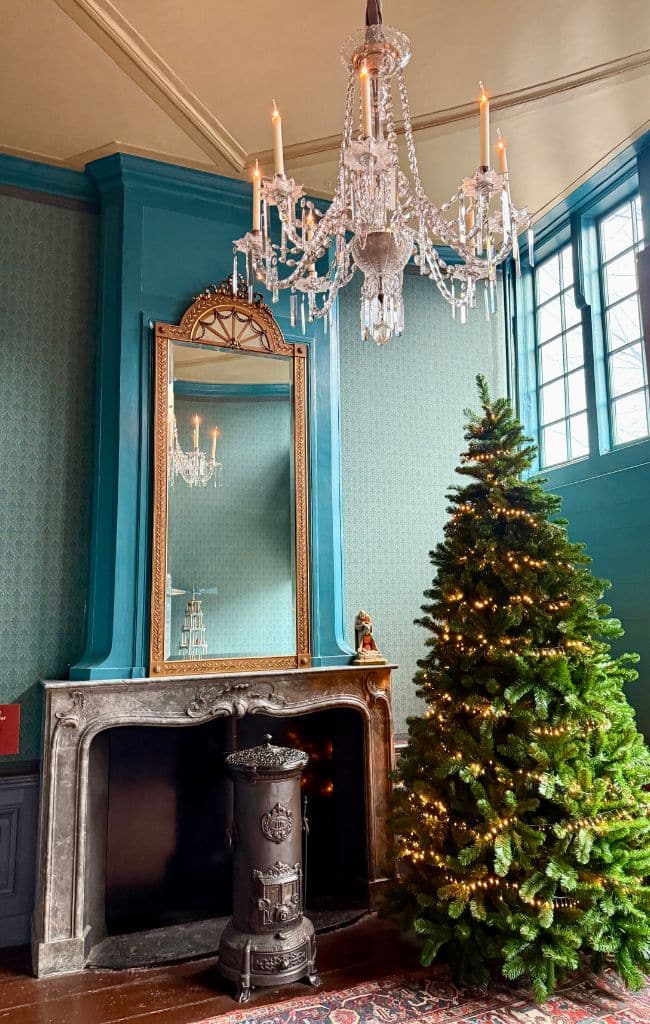
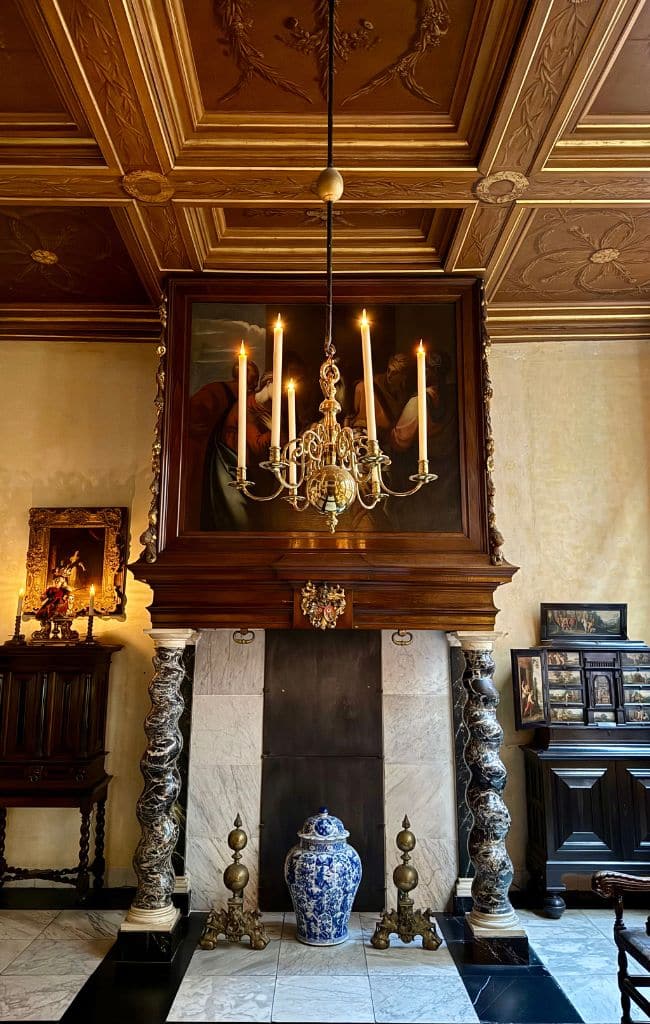
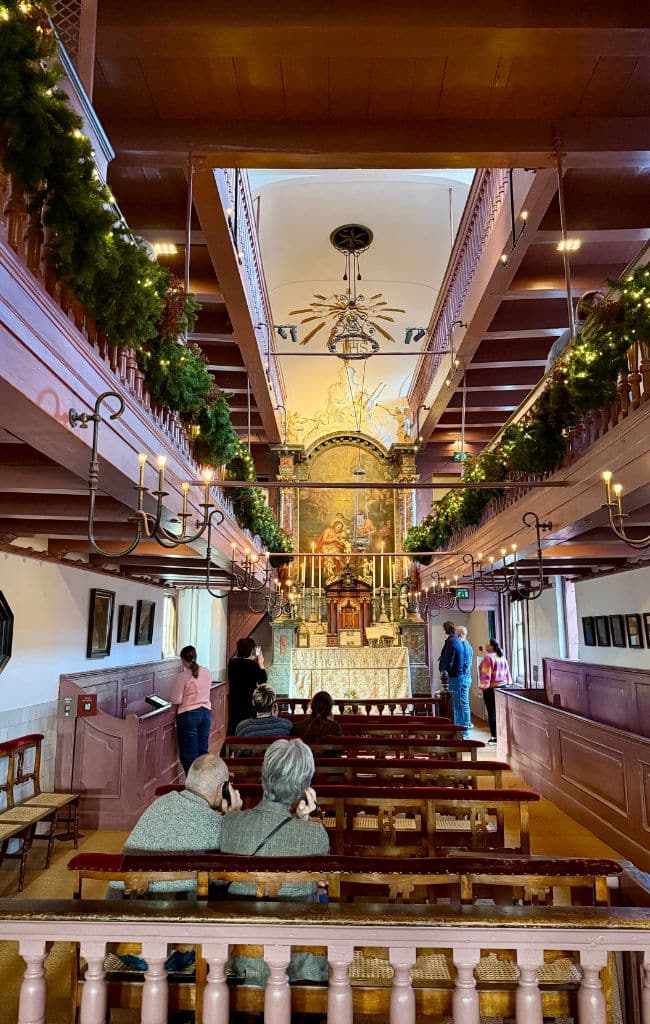
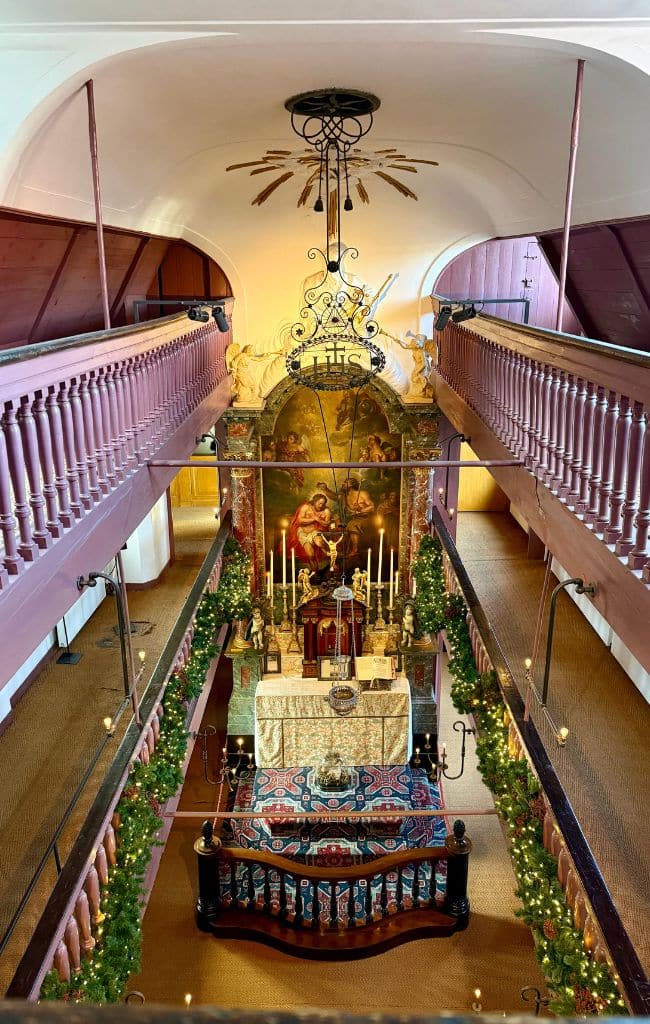
During the Dutch Protestant Reformation in the 16th and 17th centuries, Catholics were forced to worship underground. Or, rather, they were forced to worship in clandestine churches, often in attics.
Our Lord in the Attic is the best example of one of these hidden churches and is incredibly well preserved. The home was once owned by a wealthy merchant Jan Hartman, who built the church between 1661 and 1663 in the top stories of three neighbouring houses.
The church, accessed via a doorway in the alley and up a narrow staircase, is surprisingly ornate and surprisingly large: it can accommodate 150 people. There’s an elaborate Baroque altar and an altarpiece and, hidden in one of the altar columns, is a fold-out mahogany pulpit.
Not only did the home hide a church, it also had living quarters for a priest and a confessional.
What I really enjoyed about this museum is not just the church but the home itself. An audio guide leads you through the home including the drawing room once used by the family with a box bed in the corner and the grand drawing room with black-and-white field floors and heavy furniture where Jan Hartman would have once received guests.
Afternoon
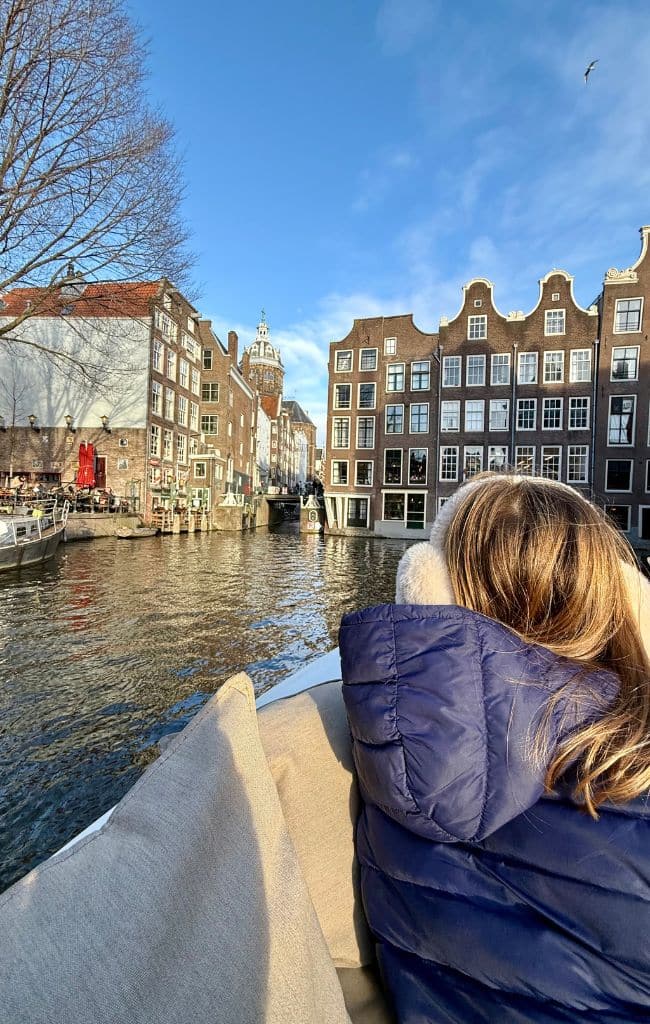
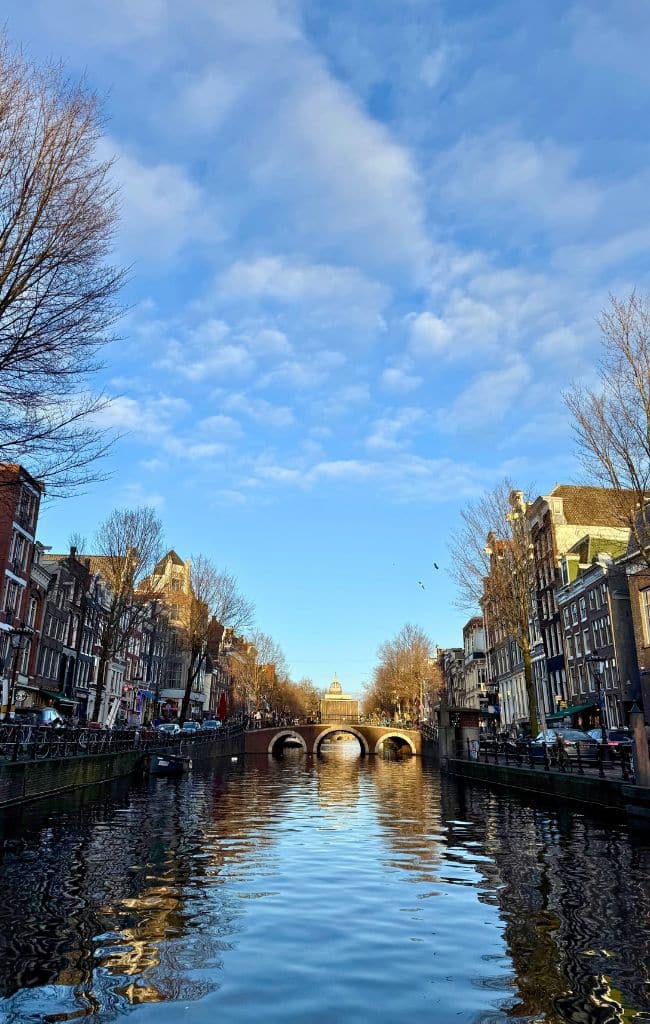
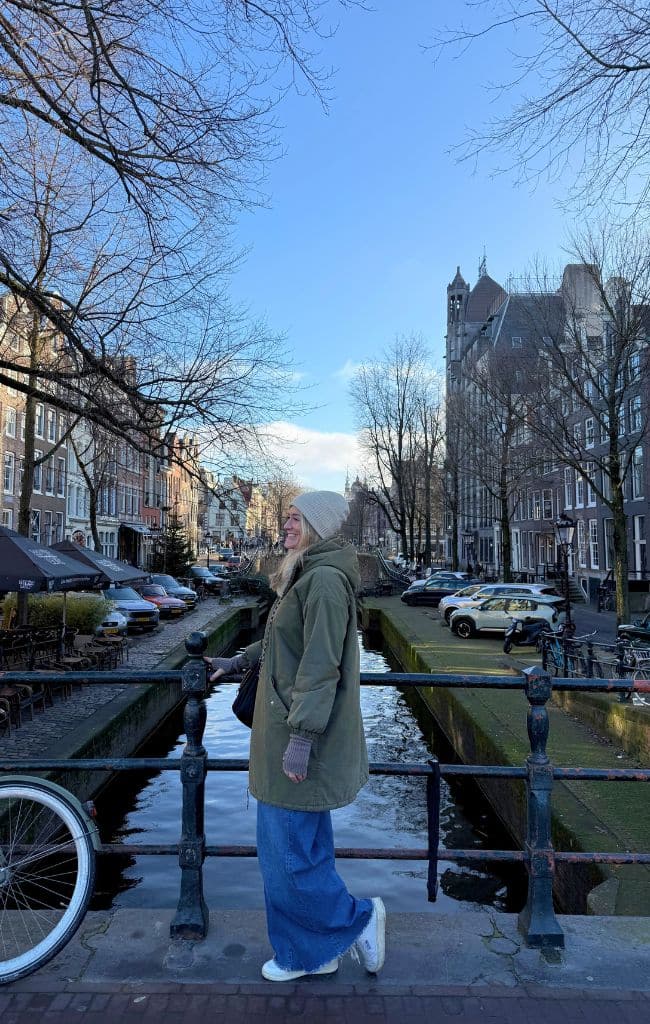
We had some time to kill between our visit to Our Lord in the Attic and our afternoon activity so we wandered along the canals of the red light district until it was time to catch our canal cruise.
This is my least favourite area of the city, not for any prudish reason, more that it’s very busy and there’s an all-pervading sickly sweet aroma of marijuana being smoked in the many coffeeshops that line the canals.
There are lots of companies offering canal boat trips and while it might feel like a very touristy thing to do, it’s a really wonderful way to see the city.
We looked at various companies including LOVERS Canal Cruises that seem to have a never-ending supply of glass-topped boats and Pure Boats, which looked lovely but are definitely on the more expensive side. In the end we decided to go with Starboard Boats simply because we got a 20 percent discount thanks to our Stroopwafel workshop.
Our meeting point was not far from Our Lord in the Attic and there we boarded an open-air boat for an hour-long cruise through the canals. Personally, I think an hour is long enough particularly if you are visiting Amsterdam during the winter as we did but if you are in Amsterdam in the summer then a two-hour cruise would no doubt be lovely.

Dinner
Although we had eaten very well during our time in the city, we still hadn’t tried any traditional Dutch food and so we booked a table at The Pantry. The popular family-run restaurant specialises in traditional Dutch cuisine and was the perfect place for our last meal. The menu is hearty with plenty of mashed potatoes and smoked sausage, and the food is delicious.
Among the various sides we ordered, I tried the pea soup with ham (excellent), we shared the traditional bitterballen (beef croquettes deep fried and extremely tasty), and had a portion of Grandma’s Cookie Jar for dessert, which was a collection of largely marzipan based biscuits accompanied by two very sweet liquors. Much better was the traditional apple pie.
Other things to do in Amsterdam
Although I said at the beginning of this guide that we saw most things that we wanted to during our three days in Amsterdam, there were a couple of things that I would have liked to do. If you have time, you may want to include these in your Amsterdam itinerary.
Van Gogh Museum
With more than 200 paintings, 500 drawings and 700 letters, Amsterdam’s Van Gogh Museum is home to the largest collection of art by the Dutch artist.
Foam
This photography museum is supposed to be excellent with four different exhibitions on at any one time.
Amsterdam-Noord
A quick free, five-minute ferry ride from Central Station, Amsterdam-Noord is home to a series of industrial parks that now house cool restaurants, tech start-ups and forward-thinking museums.
Royal Palace Amsterdam
Built in the 17th century, the Royal Palace Amsterdam once served as the city’s town hall and is today used by the Dutch royal family for official events.
Free Walking Tours
Join a (mostly) free walking tour and see Amsterdam with a local. Tips are welcome at the end of each tour and a small processing fee is charged for booking but otherwise these free tours are a great deal. There are a range of themes including a Food Tour, Anne Frank Tour, an Alternative Amsterdam Tour or the Classic, which covers Amsterdam’s main highlights.
Bike Tour
There are almost as many bike tours on offer as there are canal cruises, these ones come recommended.
Where to stay in Amsterdam: Hotel Westerpark
Travelling between Christmas and New Year we really should have booked accommodation sooner because a lot of hotels were already sold out by the time we started looking. Another issue we faced was trying to find hotels that would accept three kids in one room. As a family of five, we are resigned to booking two hotel rooms but would rather not have to book three!
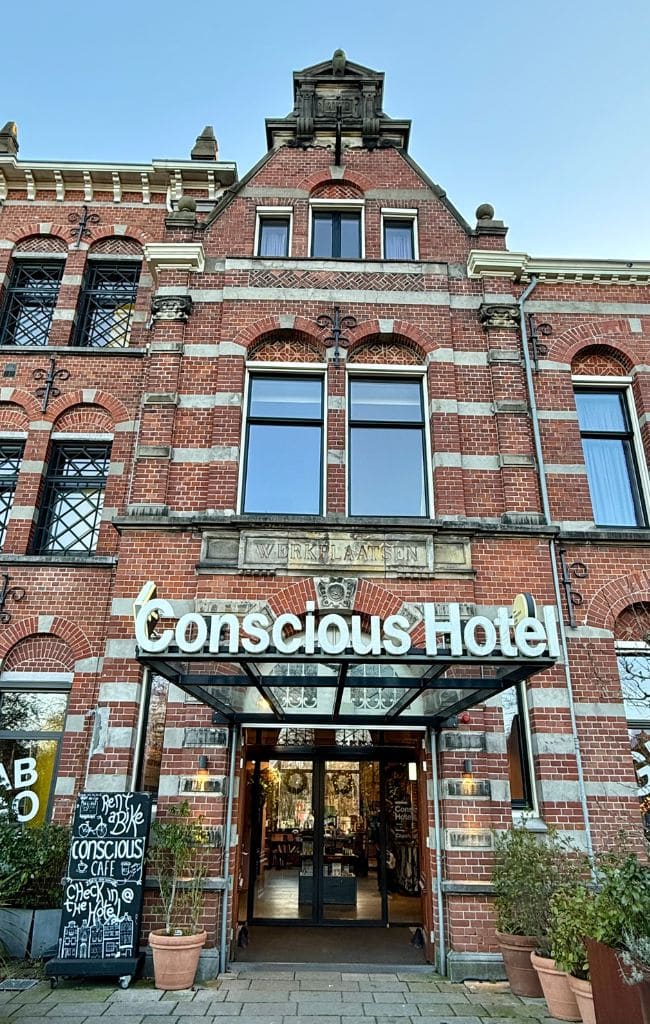
In the end we settled on Hotel Westerpark, part of the Conscious Hotels chain. The location, in the middle of Westerpark, is excellent, just a short walk from the city centre.
The hotel itself is good: an eco-friendly hotel with 89 rooms and, crucially for us, a triple room that our three kids could share. The design is minimal but comfortable (although I think the rooms could be a little cosier).
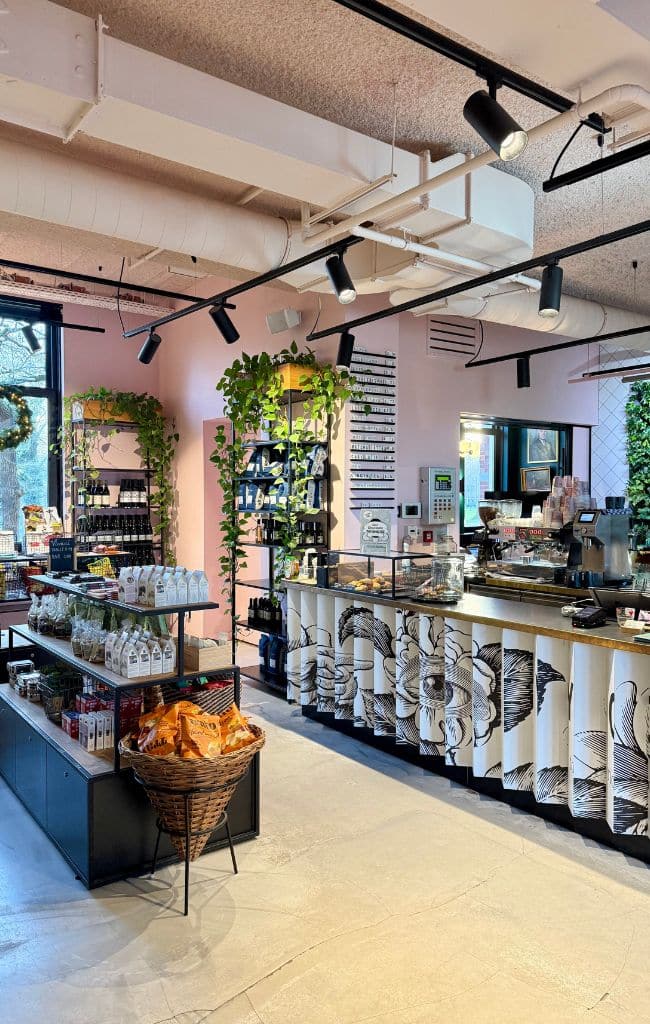
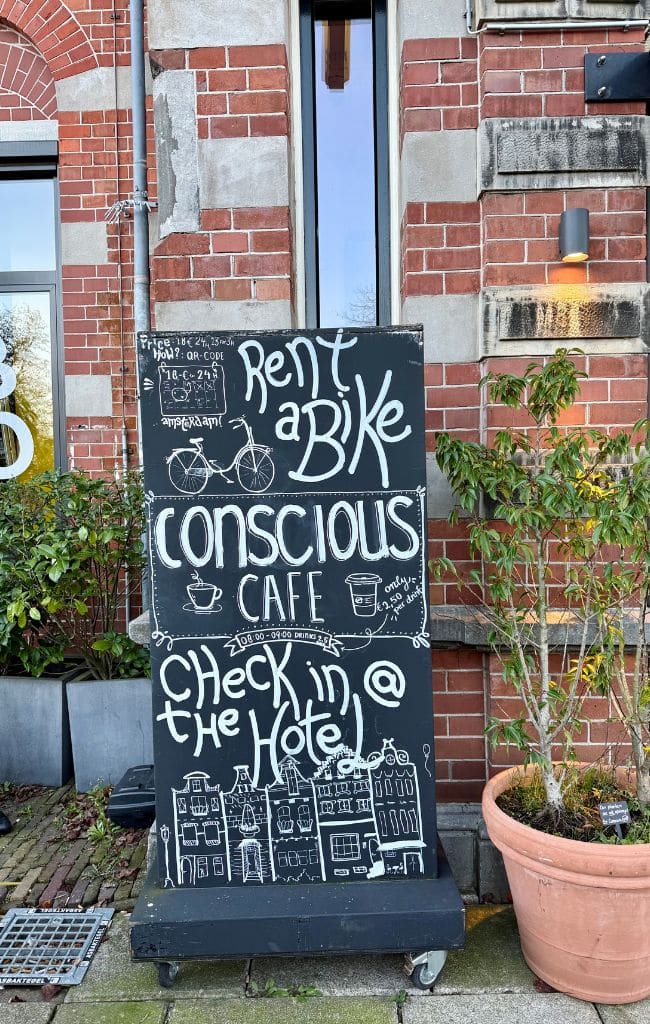
It worked well as a base but it lacked any real communal space (the bar tended to shut early) so it’s not the kind of place where you would hang around once you get back at the end of the day. On the plus side, the hotel does have a good stock of bikes available to hire.
Other hotels that we liked the look of included:
Getting around Amsterdam
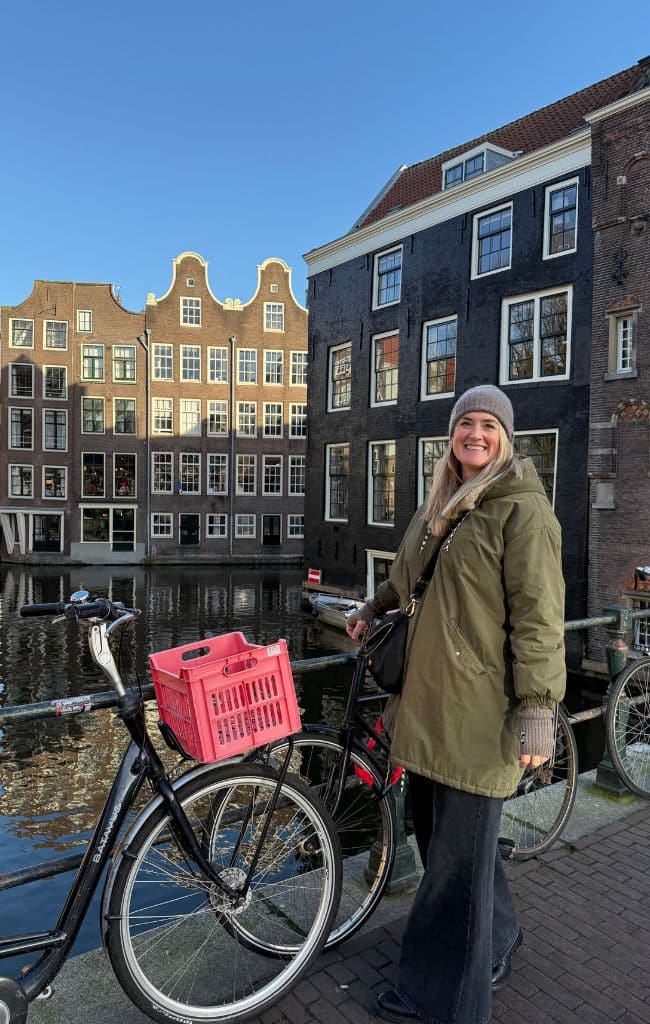
If you are a confident on two wheels then getting around by bike is definitely the best way to see the city. Our hotel had bikes available to rent otherwise you may want to join a guided cycle tour to get your bearings.
If you feel more comfortable walking, then just be aware that bike riders show no mercy for absentminded visitors straying into the bike lanes! Keep an eye out for them as they whizz effortlessly around the city.
When not walking we used public transport to get around the city and it was very easy; you simply tap in and out on the trams and buses with your bank card.
We did look at getting an Amsterdam City Card, which give you access to over 70 museums, free public transport, a free canal cruise and free bike rental, but decided that we wouldn’t make the most of it. A one-day card is €65 so would really need to see a lot of museums to get your money’s worth!
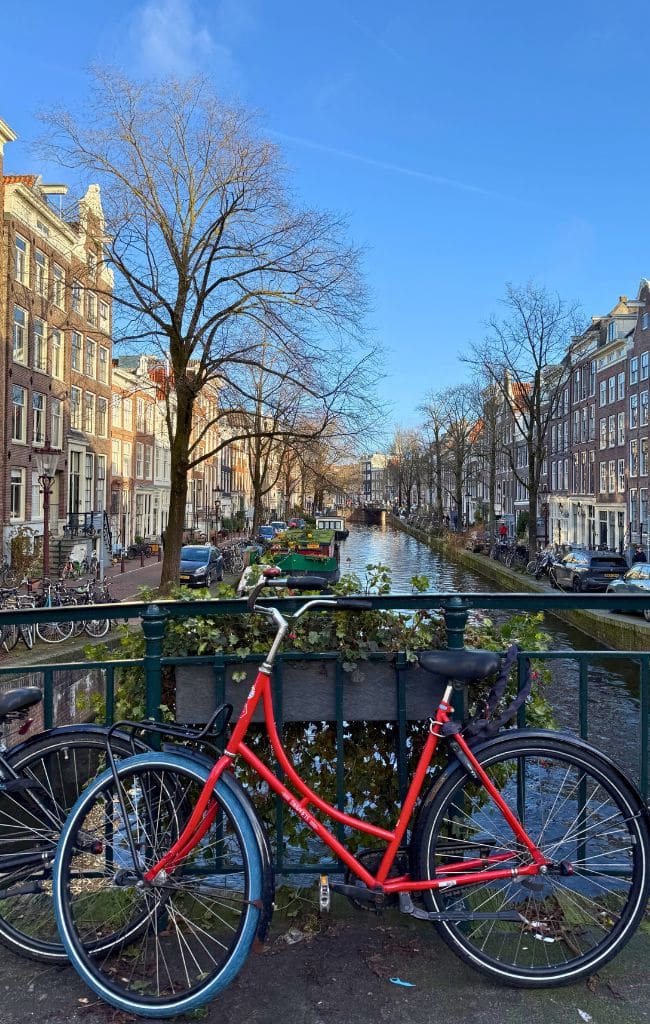
One of the things I love most about Amsterdam is just how bicycle friendly the city is; cyclists rule along Amsterdam’s city streets and there are bike lanes everywhere.
Getting to Amsterdam
We made the most of British Airways Avios points and flew from London Heathrow to Schiphol Airport.
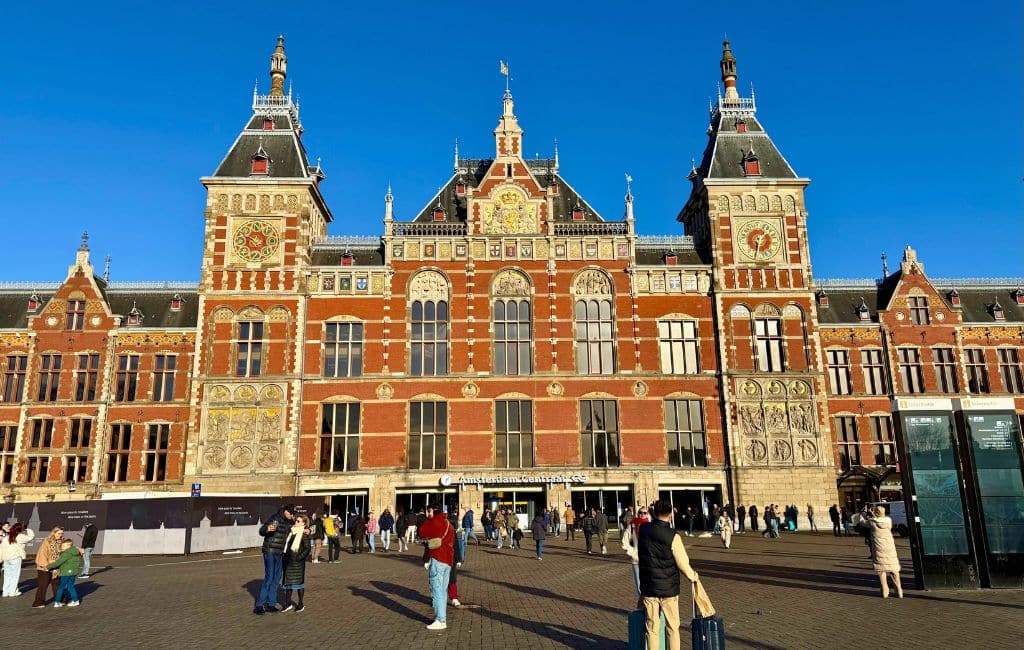
Alternatively, you may want to take the train if that’s an option. The Eurostar departs from London’s St Pancras International and arrives at Amsterdam Centraal, the city’s central station, 4 hours and 19 minutes later.
From Schiphol Airport, trains and buses run regularly into Amsterdam city centre and this is definitely the easiest way to travel. We caught a bus from outside the airport but another option is the train; the Schipol Airport train station is located beneath the airport and trains run 8 times per hour into Amsterdam Central Station.